




























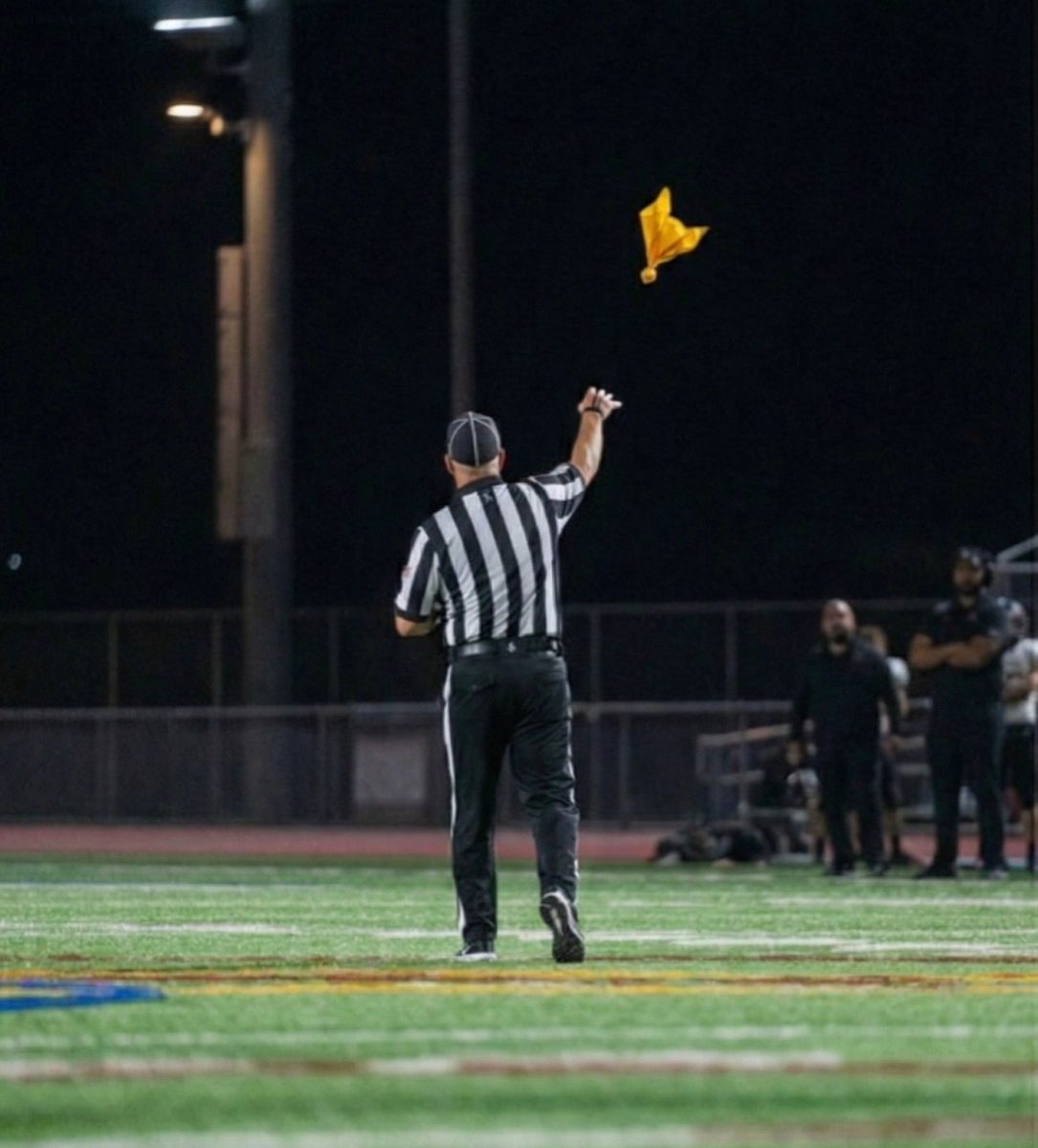
People having issues with bad high school referees is nothing new. Red-faced parents screaming at the top of their lungs over bad calls, or coaches losing their temper over a game-changing decision, has been commonplace in American high school sports for as long as anyone can remember. Even though people may not have agreed with the decision, there was at least a standard that every ref upheld. If they were wrong, they were all wrong.
However, this is no longer the case. Every single high school refereeing crew seems to have their own way to interpret the rule book.
Now, seeing as I am a player on the football team at SR, many may think that this article will be about me complaining about bad calls or whining about my vendetta with a certain referee, but that is not the case. I have been a part of games where I have been screwed by a bad call and ones where I was saved by one. The issue is not in the quality of their refereeing but the inconsistency of their calls and decisions.
If every single referee followed the rule book to the T, many players would not have an issue. Sure, we would be annoyed, but rules are rules, and they are just doing their job. However, from my and other athletes’ experiences, this is most certainly not what is occurring.
Certain refs will let you get away with anything: knee pads above the knees, an undershirt hanging out, and celebrating every play. Others won’t even let you point in the direction of the first down, ruling the field like an authoritarian regime.
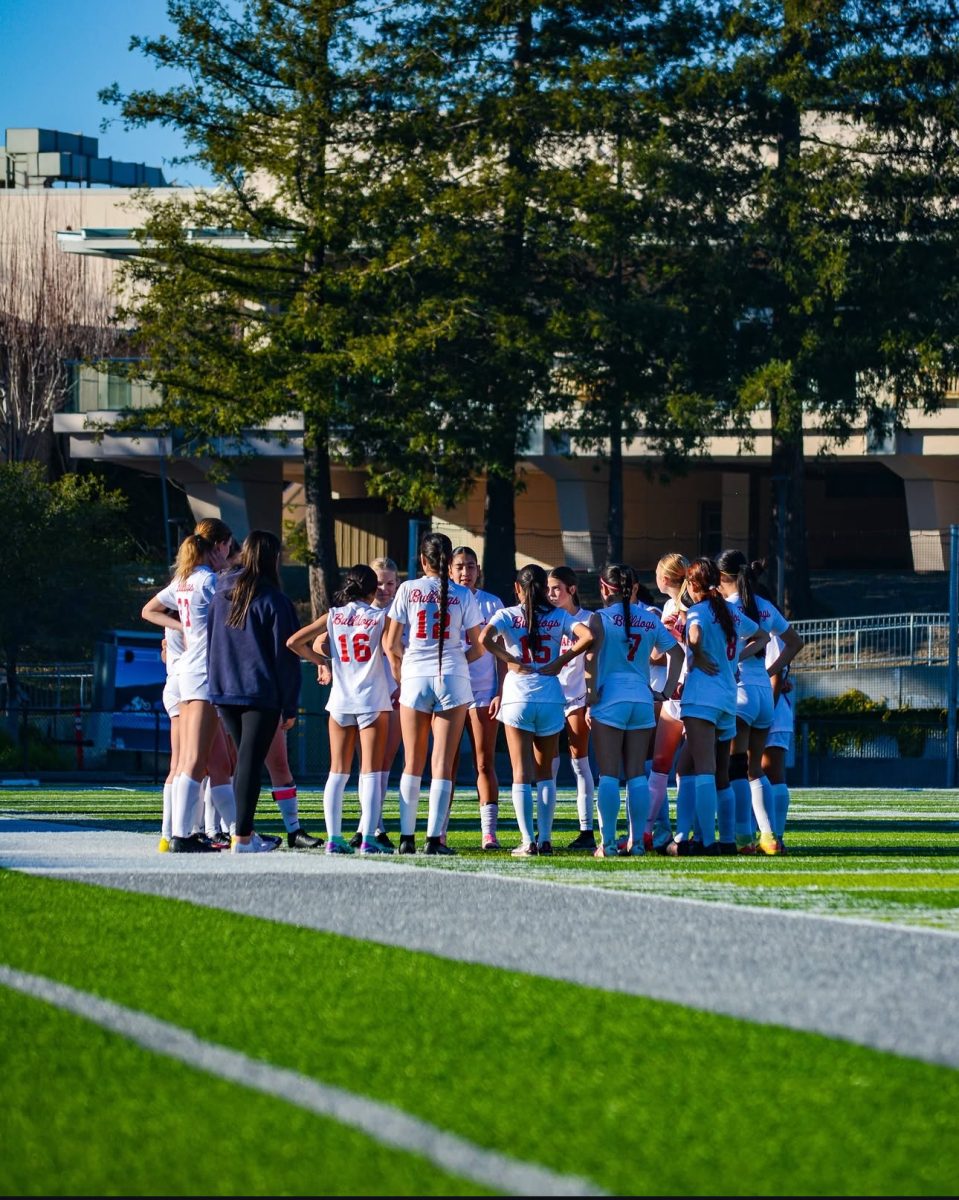
This football season against Piner, our team was driving down the field, and on a crucial third down, a ref made the other team’s safety leave the game for having his undershirt untucked. This player was one of their best. We consequently achieved the first down and eventually scored. The guy’s undershirt was untucked, and it played a factor in us winning the game.
At that point, the ref is directly influencing the outcome of the game. People always say, “Let the boys play!” and it usually is some drunk parent who is making no sense. But in this case, I would have to agree. Referees often feel as though they should get themselves into the game. Like they didn’t referee a good game unless they screamed at a kid or made a call just to seem like they were doing their job.
Many other athletes have had very similar experiences, such as Wyatt Tornello, who was thrown out of a basketball game his freshman year for having his jersey untucked. He says, “I was reminded once, then it came out while I was driving for a lay-up, and he just yelled at me to leave.” I know that may seem insignificant, a freshman basketball game, but this is just one example of many.
Another athlete, William Healy, was once told that he could not point in the direction of the first down because, he was told, “You are not George Kittle” by a referee. George Kittle’s first-down celebration is a simple three-finger point in the direction of the first down. Healy had been doing the celebration most of the season to emulate one of his favorite players, Kittle.
The instance in which he had been told not to do the celebration was the tenth game of the season. Remember: he had been doing this celebration the whole year without any restriction from refs, but a new crew came along with their own set of rules and decided to ruin the fun.
The celebration did not put the other team down, involve any sort of trash talk, or appear at all flashy. However, the refs still felt the need to use their power to limit it. In regard to his celebration, “I’m not asking to be able to get in the other team’s face or anything, but I want to be able to celebrate,” Healy says. “It makes the game more fun.”
Celebrating is not just for fun; it can actually impact the game. Celebrations impact momentum. When a team is confident, yelling, celebrating, and consequently having fun, they are harder to beat. I can speak from personal experience that it is harder to beat a team that is constantly celebrating; they seem to hold all of the momentum, which plays a role in the flow of the game.
Varsity quarterback Lachlan Royston feels similarly. He says, “Being loud and celebrating contributes to the psychological battle going on in the game.” When any team, not just relating to football, is able to celebrate and act confidently, they are going to play the same way. As a result, the other team is going to have a hard time gaining momentum as well, “ when I have had to go against teams that celebrate like crazy, it gets under your skin and makes it a lot harder to win,” Royston says.
You see, when referees take all celebration out of the game, they kill this underrated, but crucial part of high school sports. Getting the mental edge over the opponent can be just as important as a physical one.