


















Early November, Peter was over at his friend’s house to celebrate his 15th birthday.
It was either a Friday or Saturday night. He had just gotten back from a school event. The group had a few seltzers that he wasn’t much of a fan of, but it was what was easiest to get away with at the moment. He was sitting on the floor, boredom the only thing filling his mind.
Around 11 or so that night, he heard the sound of the parents’ footsteps reaching their bedroom next door, signaling it was safe enough to go and smoke. Peter’s friend was experienced at smoking marijuana and therefore was the one to teach Peter the proper techniques of inhaling and exhaling.
“Breathe it in, don’t just keep it in your mouth,” he says to Peter.
After an immense amount of coughing, they left the bathroom, but Peter decided to take another hit because he wasn’t feeling anything. From the time the high hit until it went back down, he felt as if he was in a dream. But even that couldn’t describe the euphoria. His mind was in such a space away from all that was happening, he even began to laugh at his friend’s dog on the floor.
“Once I hit the cart a couple of times, I knew it was gonna be something,” Peter says. The word “cart” refers to the vaporizer cartridge containing cannabis oil. He specifically remembers the moment he knew: he could feel the breeze on his skin, talking to his friends on the phone, and he never wanted to feel any different than that.
This is where it all started.
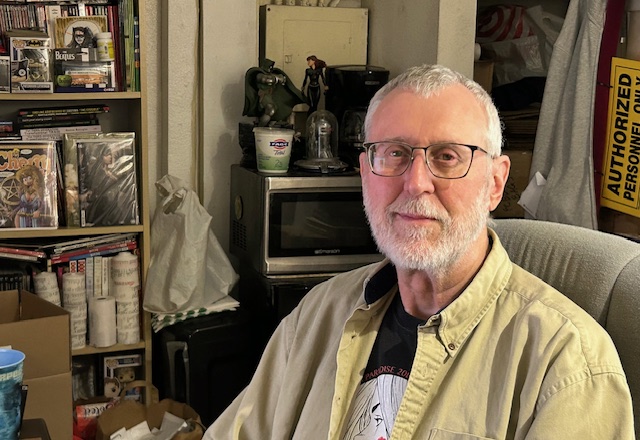
Andy Serduik, his father, says Peter was diagnosed with MS when he was a freshman in high school. Side effects of this challenging diagnosis included depression and anxiety. Marijuana was his escape from those problems.
In addition to being Peter’s dad, Andy Serduik works as an anesthesiologist. “The marijuana available now is a lot different than what we had in college,” he says. The higher level of potency has more effects on the developing brain than it once did in the past. According to Serduik, marijuana can lead to psychosis, schizophrenic symptoms, and even cause schizophrenia or depression. It also increases the risk of negative outcomes during surgical operations, such as the need to measure pain control and variations in anesthesia dosage.
After the night of Peter’s birthday, it quickly escalated. He was back at school the following Monday, and in 1st period, he asked his friend, the same one who’d introduced marijuana to him, if he could smoke again.
“Maybe subconsciously, I knew that there would be a problem if I had my own, because the original plans between him and I were that we would do it together,” says Peter. Once he got his own cart, or vape, getting high became a daily habit. Though he and his friend planned for Peter to tell him whenever he smoked to establish some accountability and safety, this didn’t last long. It turned from only using it at night to after and before school as well. By January of the year of his 15th birthday, he and his friend started experimenting with psychedelics. Benzodiazepines like Valium and Xanax were able to give him the high he had lost as his tolerance for marijuana grew.
“About 1 in 5 high school students use weed, a rate that has increased in the past decade,” reports powershealth.org: a non-profit health organization based in Indiana that also provides a health news section on their website. The misconception is that most people who do marujiana will turn to “harder drugs.” But solidifying marujiana being a “gateway drug” as a fact may not be so accurate. “People who use cannabis and do go on to use other drugs (including alcohol and tobacco) may have a higher risk of dependence or addiction to those drugs,” reports the Center for Disease Control (CDC). This poses an even bigger risk when access is becoming increasingly easier.
I asked Serduik if teens could use marijuana in a balanced way without it posing an addiction risk.
He says, “It depends on the individual. Some kids can use it once in a while just recreationally and be fine with it. Other individuals get sucked into a downward spiral of addiction and depression which feeds on itself and you get to rock bottom.” But you cannot assume that you’ll be one case or the other. It has to be confirmed by studying the family history of addiction.
Paulina Montes, a licensed therapist, works at the SRHS Wellness Center and has noticed there seems to be an increased use. “Because of it being legal now and places you can walk into and buy it, it seems it’s just easier to get and there’s different forms of using it that don’t have as much odor,” she says.
The way marijuana products are being marketed nowadays may also be a cause of this increased use.
“From what I’ve seen, I would say it’s definitely aimed at a younger audience,” says Peter. The use of medical marujiana tends to be more prevalent with older folks, but the higher potency products with silly-sounding names and cartoonish designs are clearly targeted towards the younger generation. “The reason for the product and the actual product don’t always align,” Peter says.
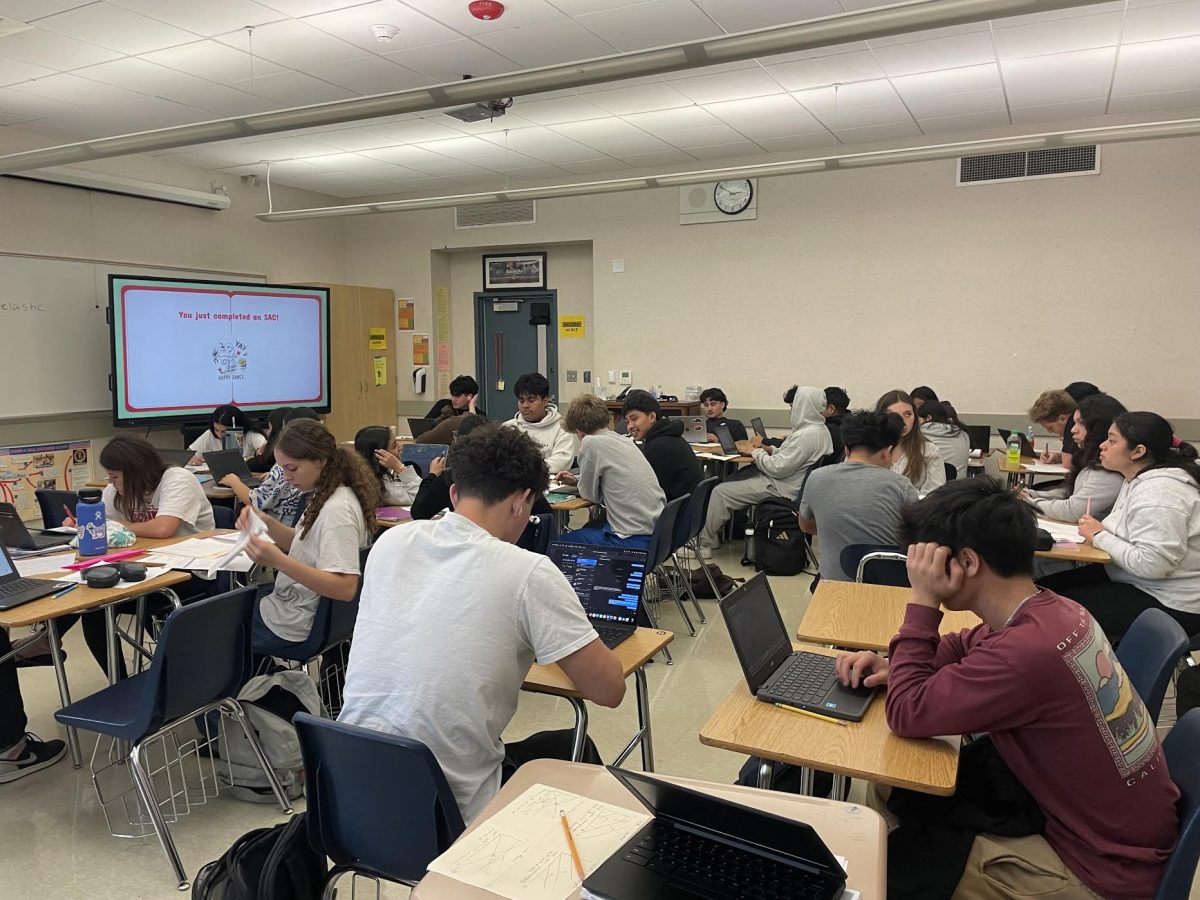
Since the start of the 2025-2026 school year, Wellness has connected seventy students to their center. Judy Scherwin, a Wellness Coordinator at SRHS, says, “Out of those seventy we probably have close to twenty that are struggling with substance misuse.”
According to Scherwin, some students dismiss marijuana as “just a plant,” and therefore nothing to take seriously.
“Maybe because they don’t use other substances it’s sort of seen as harmless or not really important, or ‘I’m not an addict I can still get good grades,’” says Montes. The risk in this thought process is that it can lead to habit because your brain will begin to understand this behavior as a need in order to relax and have fun.
Now, this isn’t to say that all teens who start with weed will end up with benzos or whatever drug it may be. But “without the proper screening to see if somebody would be a good candidate for medicinal marujiana, it just paves the way for abuse of other drugs,” says Serduik.
“Addiction is not just one sentence,” says Christine Gazulis. Gazulis has a Phd in clinical psychology and works as a therapist in San Rafael. She explained that addiction isn’t simply the want to do the drug, it’s the seeking and craving of it. And it’s true with all drugs, not just marijuana.
From the popularity of the Juul to the “cartdemic” that led up to quarantine, both of which targeted their brand towards teens, several studies began and have developed to question and understand the effects that nicotine and marujiana have on the teenage brain specifically. So why is the teen brain more vulnerable to depending on substances?
“There is a [stronger] chemical dependency that begins to crave the feelings of the drug in the chemistry of the brain,” Gazulis says. THC enhances dopamine (known as a neurotransmitter or internal chemistry drug), which can lead you to feel motivated. Areas of the brain essentially “light up” in ways that make you feel certain feelings.
“Then there’s dopamine drag, for people who use it everyday, that’s where the crash comes from,” she says. When you’re high and your dopamine is lit up, it’s out of balance with other neurotransmitters, such as serotonin, oxytocin (mood influencing chemicals). They carry the job of keeping you balanced; awake during the daytime and asleep at night.
“So if you’re sleepy when under the influence, maybe you’ll be more alert when sober,” she says. This is because when you’re sober, another brain chemical will be out of sync.
Vaping rather than smoking or taking edibles may be more habit-forming as well. Gazulis says, “[It’s] because it’s so easy you can stick it in your pocket, [and] it comes in different flavors. So vaping does make it more unnoticeable.”
“You can easily get away with it, even take it on a high school campus,” she says. She discussed how when she attended SRHS as a teen, kids would go behind the gym and smoke. Essentially history is repeating itself, the only real difference is that it’s more accepted now because it’s legal and can be used medicinally.
Weed has been pretty much a teenage tradition, and ever since it became legalized (recreationally) in 2016, popularity has only grown. But what are teens nowadays exactly smoking? It’s not always from a pipe or a bong, or even a joint.
You may have heard of the words pens, “carts,” and “dispos” being thrown around. Though these devices make it more convenient to be able to get high, it doesn’t mean it’s a less harmful way to do it.
In San Francisco alone, there are around 42 operating dispensaries as of 2022. 99.5% of California residents live in a county where they can access at least one dispensary. Though dispensaries are required to ID their customers, this can still open up the possibilities of teens to access weed at a much easier and higher rate than in the past.
Rose, the pseudonym for a current junior at Terra Linda High School, was first introduced to marujiana during a sleepover with her friends.
“I actually didn’t really want to [smoke] but they all were and I didn’t wanna be left out so I just tapped the pen,” she says. She smoked a few times after that. Despite feeling unpleasant side effects she continued until she got used to the buzz and eventually ended up enjoying it.
“I definitely consider myself now addicted. Probably as an underclassman it was definitely controllable,” she says. Now, it’s part of her daily routine and helps her get through the day. In terms of the chemicals in what she’s smoking she admits she does think about it, but not as much as she should. “I do think about how bad the pesticides are but that ain’t never stopped me before.”
Scherwin talks about the various ways in which students first get involved with marijuana use. It could be exploration, social settings, difficult times/situations, or even at home with the grownups in their own life.
Christine Gazulis says, “I [she] certainly know[s] adults who have children who use marijuana to escape the stress of being a parent. Or some adults have a little bit in the morning because they know they’re gonna have a tough day at work.” Gazulis describes there being pro’s and con’s to this usage. “In a positive way there is some regulation because what’s in the dispensary has a label and the people behind the counter tell you what’s in it,” she says. The negative is that it can be used too casually. It can also be seen as the primary treatment for anxiety or depression. This can “mask underlying problems that need attention,” she says.
When interviewing another student at San Rafael (another source who wanted to remain anonymous), I asked whether they felt addicted or in control of their smoking habits. The student says, “I feel like it fluctuates really often and most times it feels like I’m in control but sometimes it can be controlling me.”
“In our community specifically, it is very different. Younger and younger adolescents are experimenting at an earlier age,” Scherwin says. Some might blame this on the growing presence of social media within younger generations, but when thinking about our morals, our values, it really comes down to the messages we receive.
The somewhat hard truth to admit is that marijuana has a huge impact in not just how you think but your perspective on the world and how you dwell with hard situations. “If it’s impacting you and your goals, future, life, relationships, that’d be the time to think if it’s [weed] something that’s working or not,” says Montes.
“The worst thing you can do is have a teenager or young adult try to handle it on their own,” Serduik says. And the biggest thing not to do is ignore it. Which can no doubt apply to the person struggling, but it really applies to the parents. “It was easy for me and Peter’s mother to say it’s not a big deal,” Serduik says. But it is a big deal. The truth is it will only worsen if the signs are ignored.
There are resources available for every level of need. Peter went through a ninety-day inpatient rehab program, where he spent an entire summer dedicated to recovering. The next step after that is using meetings, counseling, and/or therapy over durations to fully recover.
If you feel like you’re struggling, know that those feelings are valid.
“A lot of people will tell you you can’t get addicted to marijuana, but you can become mentally dependent on it and obsessive,” Peter says.
Just because you don’t have hardcore withdrawals and could die instantly from it like you could with fentanyl, doesn’t mean it can’t impair your wellbeing.
Recognition is the first step, and it takes quite a lot of willpower to notice yourself wrapped into a pattern of addiction. It’s not going to be easy, but “it’s not worth all the trouble for a better feeling, because it will feel too good and that’s the problem,” Peter says.