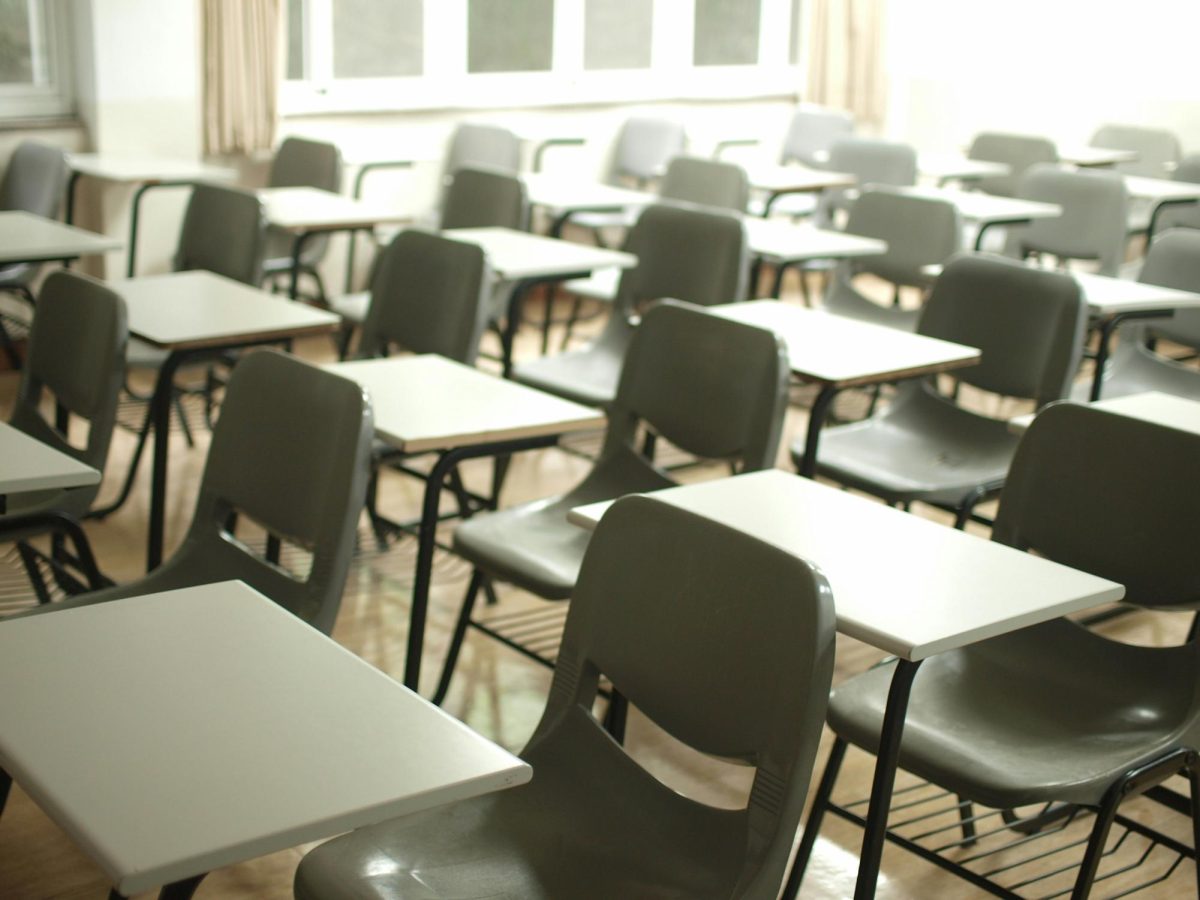
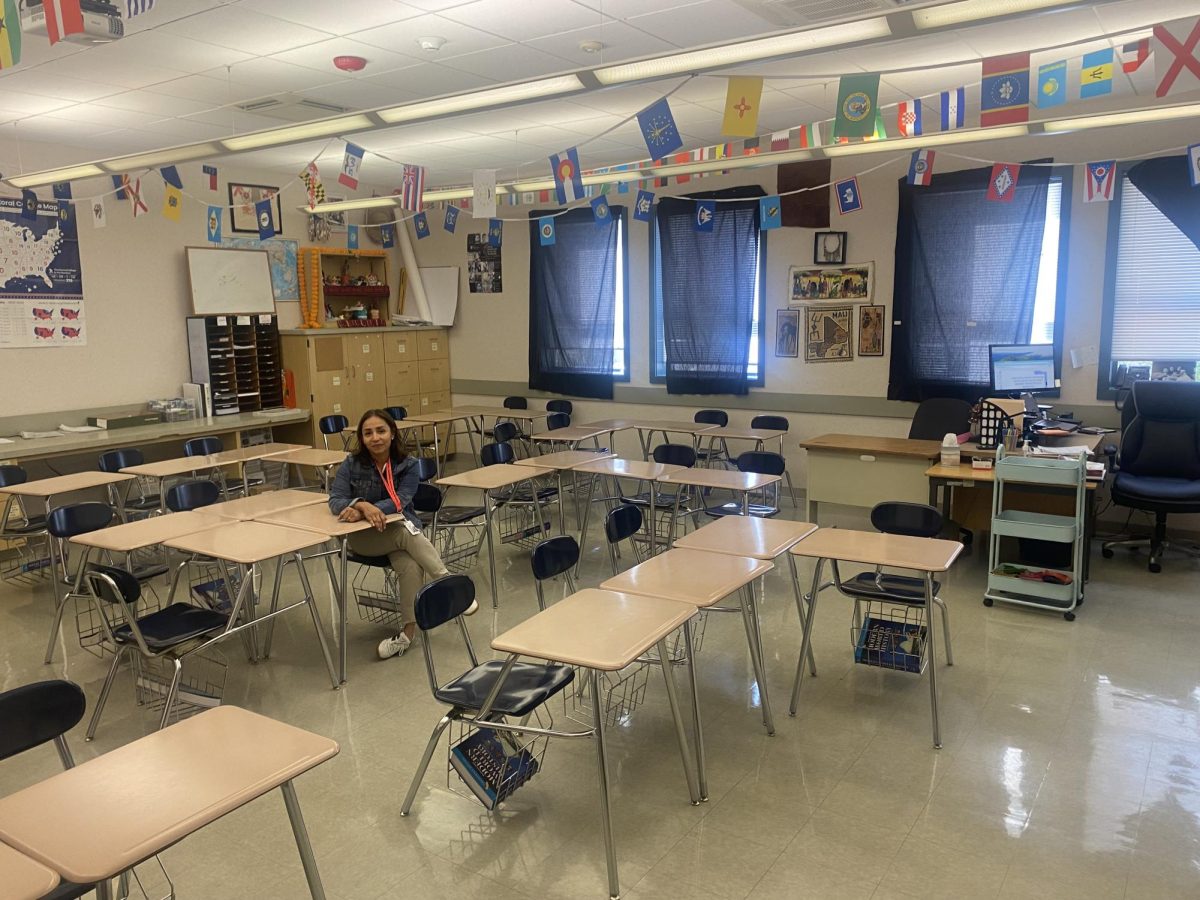

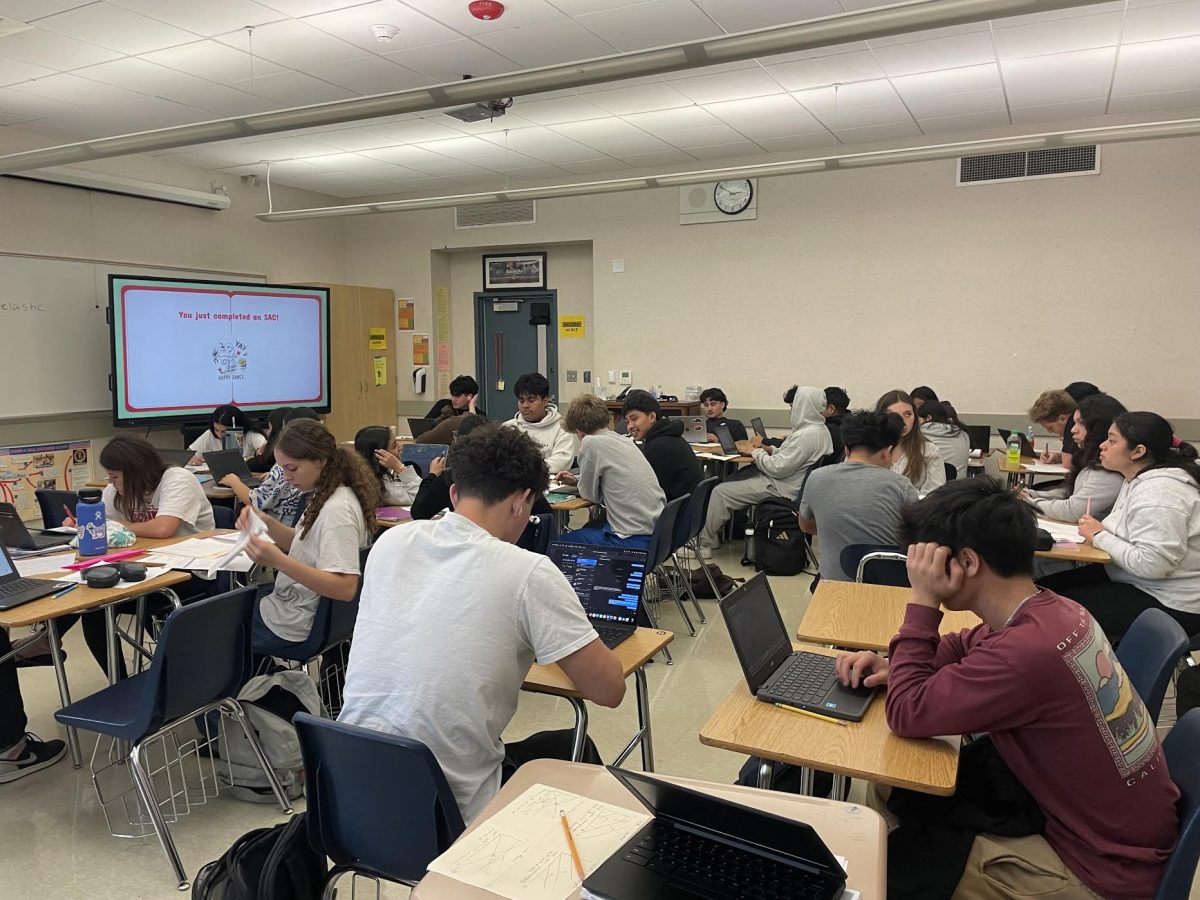



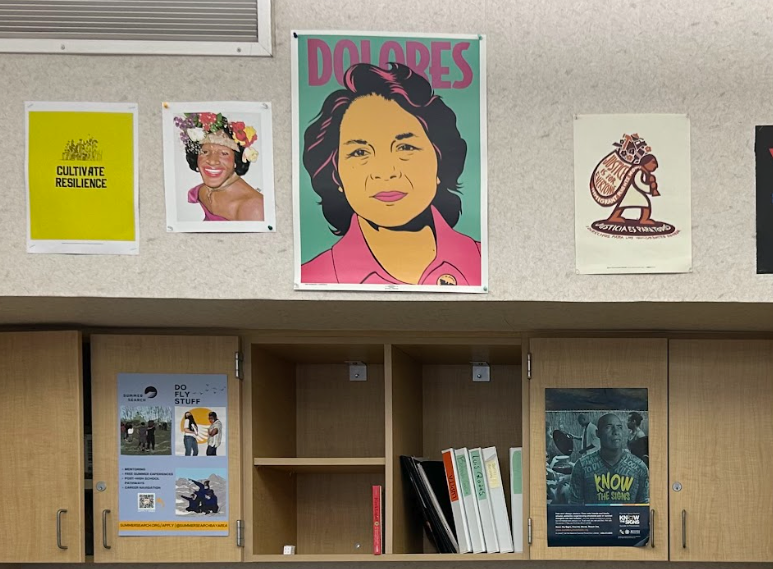










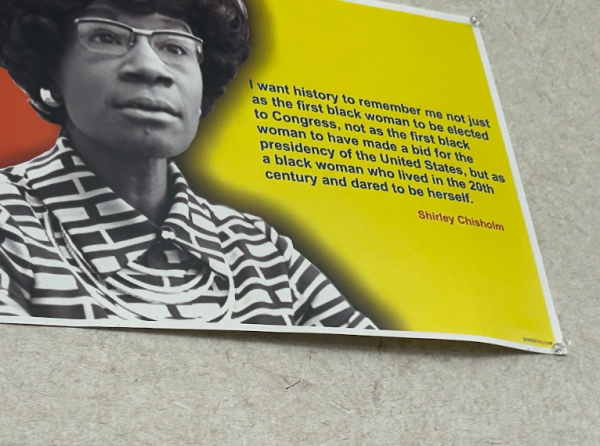
Freshmen at San Rafael High School have been crowding into Ms. Verheecke’s Ethnic Studies class since it was first introduced in 2020. As students wait to begin, they’re met with the faces of activists like Marsha P. Johnson, MLK Junior, and Dolores Huerta, whose posters litter the room’s walls. Most students don’t recognize the historical figures, but hopefully, by the end of the semester-long class, they’ll at least have an understanding of the movements they stood for.
In October of 2021, a semester of Ethnic Studies was made a graduation requirement by the California State Government. The California School Board Association describes the class as a learning experience that “examines the histories, experiences and cultures of various racial and ethnic groups and explores race and ethnicity in various social, cultural, historical, political and economic contexts.”
“School is where the values of a society can be enacted,” says Ms. Verheecke. She thinks it’s important to discuss the classes’ potentially controversial topics, like sexual orientation and gender identities, because “if it doesn’t happen here, I don’t know that it will happen at home.”
Before Ethnic Studies was World Cultures, which Ms. Verheecke only taught for a year before it was replaced. She says, ”[SR’s Social Studies teachers] shifted the focus when we knew that it was probably going to become a graduation requirement at the state level, and because we felt like there was a need at our school site.”
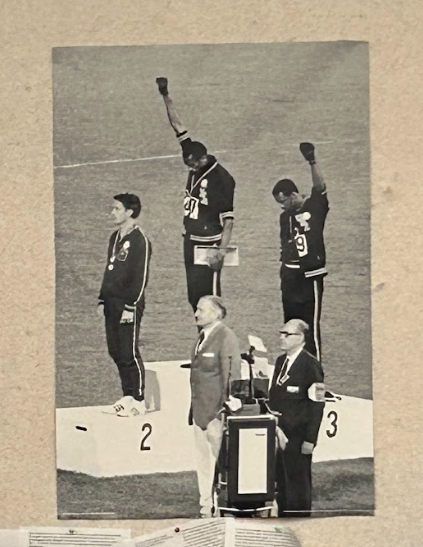 San Rafael’s Social Studies department had begun to discuss including the new class in May of 2020, right after the Covid-19 pandemic had caused local schools to shut down. Meeting via Zoom, teachers discussed wanting to change the curriculum incoming freshmen were seeing, especially with the difficulties that quarantine posed, and the racial divide in the school’s student population that they had seen before that.
Ms. Verheecke, alongside her coworkers Ms. Farrell and Ms. Padayachee, who has since left SR, became the Ethnic Studies planners. The rest of the school district had heard about the upcoming law as well, with the Marin County Office of Education coordinating a mixed group of teachers to develop a list of topics and resources for the class for local schools to use. San Rafael’s teachers followed these guidelines, and attended a 3 day online seminar with Jason Muniz, the site director for UC Berkeley’s History-Social Science Project, while meeting weekly to develop curriculum.
The neighboring Terra Linda and Novato high schools began to adopt the class as well, but the classes are all a bit different. “It’s not like other history courses,” says Ms. Verheecke. “There’s no list of standards that we need to teach.” She adds that the class is meant to vary, because its job is to respond to the needs of each specific community. “There’s a reason why the state said we’re not gonna tell you exactly how it should be taught.”
Ms. Shannon Erby became San Rafael High School’s Assistant Principal during the 2024/2025 school year. But before that, she worked at Berkeley High, where she taught Ethnic Studies and US History.
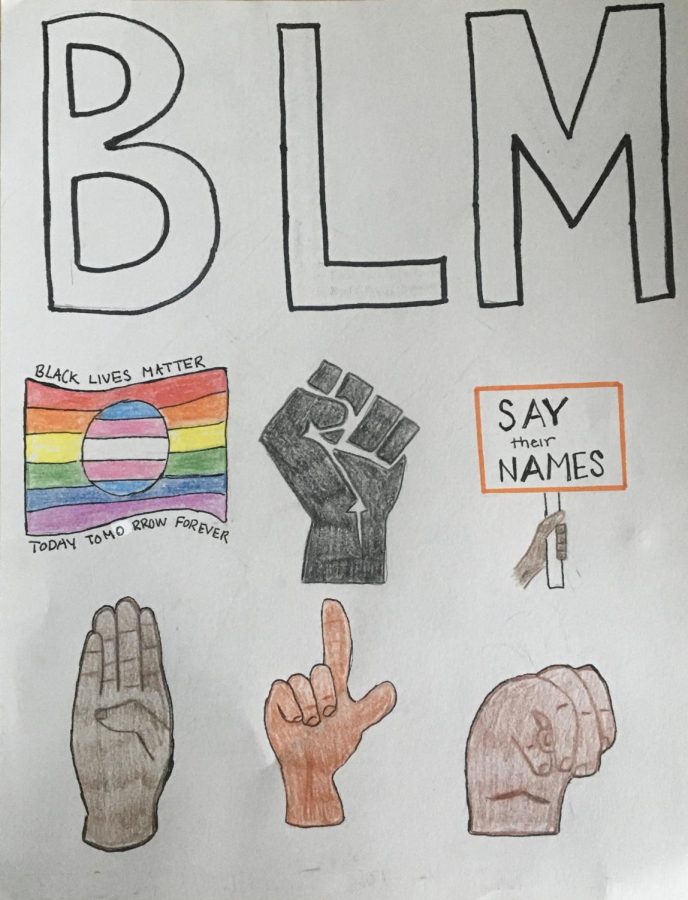
She described teaching in 2014, when a young man named Mike Brown was shot and killed by police at eighteen. “My kids wanted to learn about it,” she said, so she decided to put what they were learning aside, and focus on what her students wanted to learn about.
 Erby worked with her fellow 11th grade teaching team to turn discussion of Brown’s case into a seven-week unit on the Black Lives Matter movement. “We just developed a unit, which took a lot of work, because, at this time, I had to educate myself, too.” Erby revealed that oftentimes, she’d find herself learning about certain topics through preparing for lessons.
Erby explained that she would frequently let her students choose a current event to learn about. She would do so by assigning an article to read, then host class discussions in order for students to voice their own opinions and hear others. She said the creation of the BLM unit was, “responsive to what was happening in our world at the time and to students’ interests.”
Ms. Oseguera, another Ethnic Studies teacher at SR, was hired to help develop more new classes in 2022. The classes made up the Educator Academy, a program that spans over the Junior and Senior years of high school with the hope of fostering new teachers in the community. Seniors in the academy work at the afterschool programs of local elementaries while Juniors take a Social Justice class, both groups ultimately being taught by Ms. Farrell.
“I was mostly interested in the class because of the Social Justice lens of history,” says Bella Simone, a Junior in the academy. She doesn’t want to become an educator, but she was intrigued by being in a class,“where if there’s crazy events happening in the world we’ll actually talk about it and address it.”
Simone is referencing two particular assignment types that Ms. Farrell uses. Students are either given two news articles describing the same current event, one from a left-leaning source and one from a right-leaning source, or look at images related to current happenings and discuss what they see, think, and feel about them with classmates during daily warm ups.
“I would say that’s probably the most political assignments that I’ve had,” says Bella.
Daniel Allen is a college prep government and economics teacher at SRHS with a teaching style that is in line with Ms. Farrell and Ms. Erby’s. “I don’t want you to think like me,” he says to his students. “I just want you to read.”
Like other teachers, Mr. Allen presents students with leftist and rightist perspectives on a political topic and has them decide which they agree with, although some of his assignments also include a center perspective. This kind of teaching exemplifies Allen’s goal as a teacher to “equip you with the ability to look at information from multiple perspectives and come up with your own view.” Mr. Allen says he is always wary of confirmation bias, or the tendency to seek out and favor only the information that aligns with a person’s existing beliefs.
A part of teaching students to form opinions based on multiple perspectives is ensuring that the teacher isn’t sharing their own personal opinions. Students can be easily influenced by their teachers’ views, especially if it’s engraved into the curriculum or teaching process. This is a big reason why school districts feel the need to review almost everything that teachers put in front of their students.
An act to amend sections of the Education Code relating to educational equity explained the restrictions and regulations around the materials used by Californian teachers. “Existing law requires teacher instruction and instructional materials, including materials adopted by the State Board of Education and any governing body, to be factually accurate, align with the adopted curriculum and standards.”
To ensure that materials meet these standards, much of what teachers use has to be approved by a curriculum council, or a panel of people involved in local education, including school’s administrators. This can span from one AP Lang teacher wanting to use a different book to entire curriculums for new classes (like Ethnic Studies or the Educator Academy).
Matthew Winton has worked at SR for 25 years, teaching classes like AP Euro and AP World History. He explains the process of getting his courses approved by the secondary curriculum council. “I had to share the textbook that I wanted to use and review the standards and I had to have a syllabus and all this sort of stuff to get it approved.”
Teachers have to follow the guidelines, but Mr. Allen calls California’s Department of Education’s curriculum guides vague to the point that teachers can put their own spin on what they do. “You’re supposed to cover the content, but it doesn’t really say you have to cover it in this specific way.”
The aforementioned act to amend the Education Code says this is true, so long as what teachers do is “consistent with accepted standards of professional responsibility, rather than advocacy, personal opinion, bias, or partisanship.”
“I just have to be really really careful never to teach ideology, but to teach facts,” says Dr. Sulem, who teaches AP Government and Economics at San Rafael.
Dr. Sulem has a different student give a presentation on a current event each Monday. When the teacher finds something particularly upsetting, or feels a need to cover it herself, she’ll take a moment outside of scheduled work to cover it with her class. She uses a similar tactic to Allen and Farrell, showing both left- and right-leaning news coverage to provide a full picture, though she shows it to her class instead of making it an assignment.
Sulem says she’s always very conscious of creating this balance in views, especially since she had difficulties with students just last year.
“I had two students that were strong Trump supporters,” says Dr. Sulem. Throughout the school year, the teacher describes many instances wherein she felt publicly attacked by the two students and the hurtful comments they made in her classroom. She tries to think of why, saying, “they did not feel included in the class, probably.”
Sophie Mercer, from SR’s class of 2025, was a student in this specific class of Dr. Sulem’s. She describes the students as “uninterested in learning with and from students and a teacher that didn’t share their conservative, right-leaning values.” Mercer says that Dr. Sulem’s political views were somewhat obvious, but she never explicitly stated them or tried to force them upon her students. “She really tried to get those boys engaged throughout the entire year and was nothing but respectful in their beliefs,” adds Mercer.
Mr. Morales says he thinks things that may have once not been controversial in the classroom ten years ago are now. Mr. Morales has been the assistant principal of SRHS since 2024, dealing in Instruction and Curriculum, but before that, he was a biology teacher. His teaching days date back at least a decade, and he’s noticed a change in people’s opinions on controversial topics.
During the pandemic, when classes were online, Mr. Morales was teaching a class and got called out by a parent for talking about something political. “I referred to something that the, then running for President, Trump said to a group of people as being a racist statement,” Mr. Morales explained.
That parent wrote him an email saying “stay in your lane,” according to Morales. His response to this was a well-thought-out email with one central argument: the idea that teachers can express their own opinions, as long as it’s expressed as their own personal opinion and that they’re not trying to make their students align with it.
“There’s this expectation that teachers should be unbiased,” says Ms. Verheecke. But, she adds, teachers are meant to be setting an example for students, “we’re giving the framework so that they can make their own decisions and their own opinions.” She says teachers should form and express beliefs to show their students what it looks like to do so, and because it is impossible not to when everyone contains bias.
The idea that everyone is different, with their own unique lives and ideals, is exactly what classes like Ethnic Studies are trying to teach. “[Teachers] are in this because we want students to think,” says Verheecke. “It would be really silly if we were trying to like, brainwash our students, because that’s exactly what you don’t want to happen.”
Educators have to cover a wide range of ever changing topics to help students think critically about what they learn, and about the vast world that they are a part of, and teachers need a certain extent of freedom and flexibility to do so. And while student protections are limited in the form of written rules, they aren’t in the minds and morals of San Rafael High School’s educational staff.