





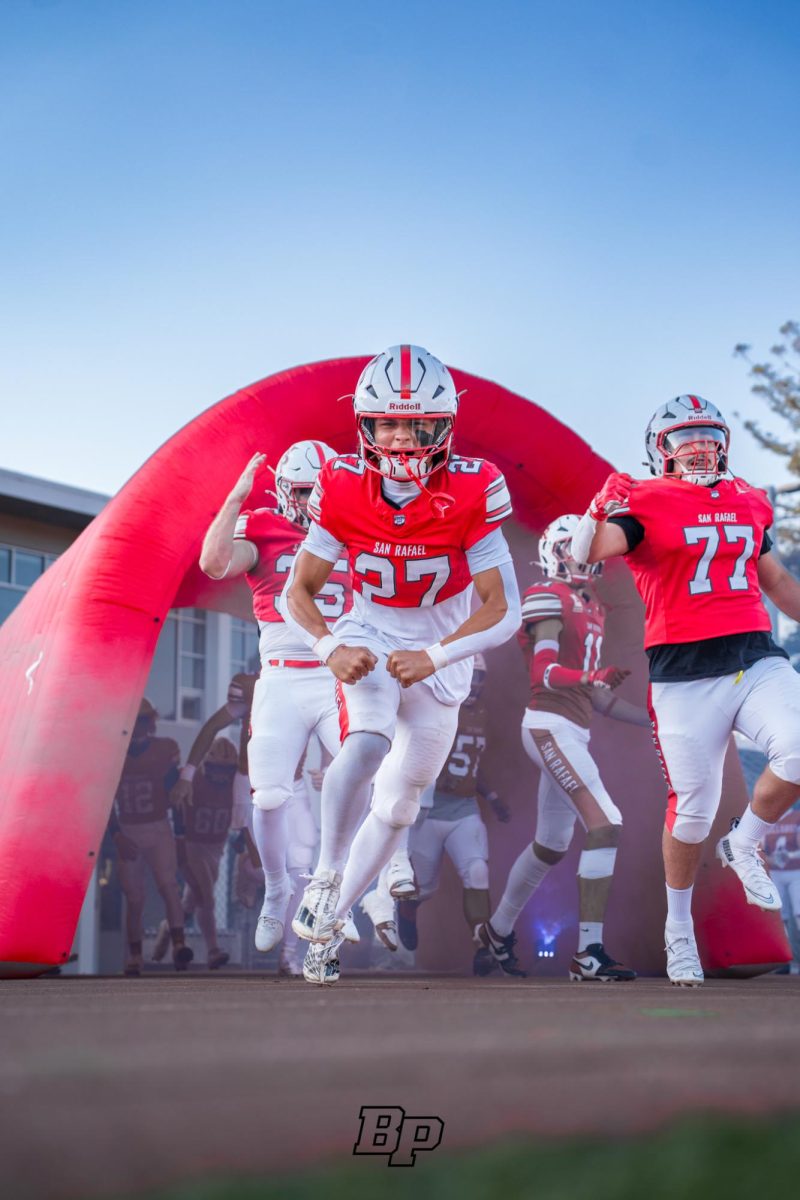













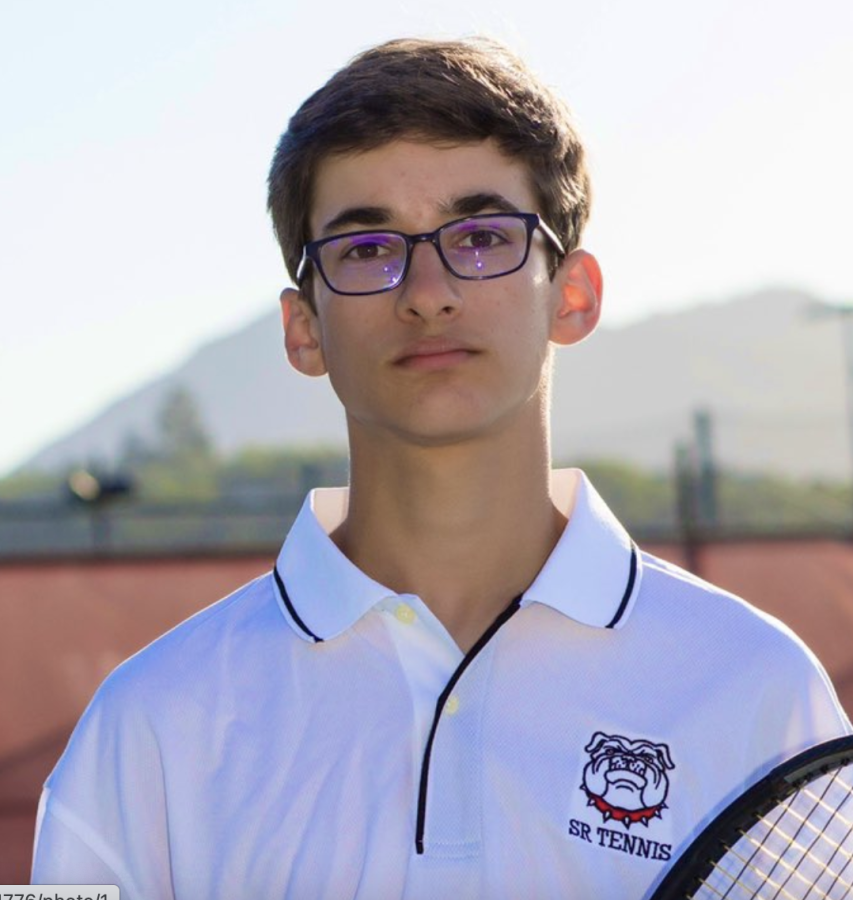
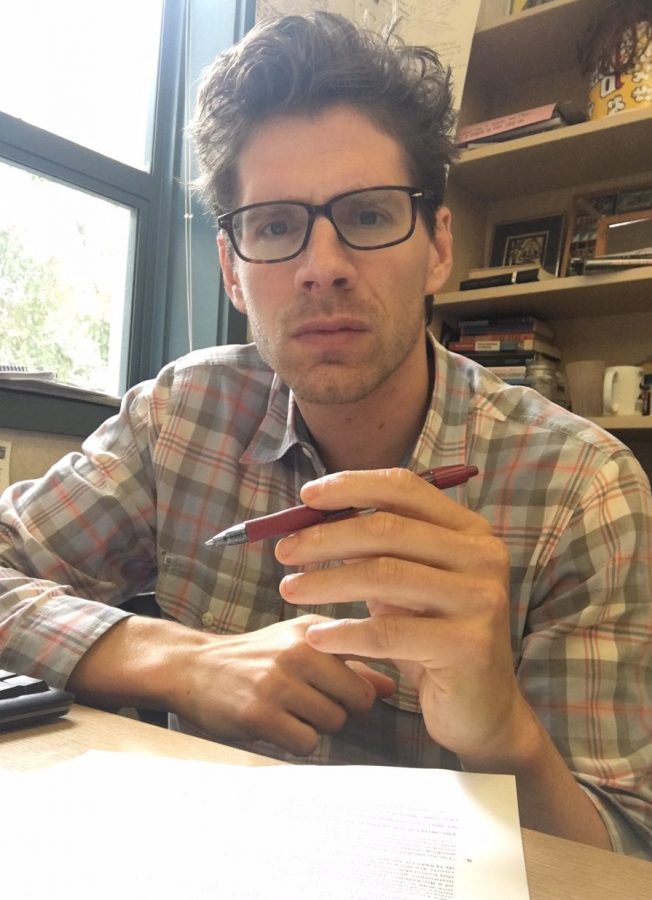

Haden Berlinsky did everything he was supposed to do. As a senior in last year’s graduating class at our very own San Rafael High School, he took a demanding schedule of honors and AP classes, giving him a 4.3 GPA. In addition to excelling in the classroom, he served as a two-year varsity captain and a three-year varsity starter on the football team. He was closely involved in student leadership, taking the job of rally commissioner, which required him to MC rallies in front of our whole student body.
Like many California kids, Haden had always dreamt of attending college at a University of California school. For years, he built his resume around that very dream, excelling in academics, athletics, and leadership roles to give him the best possible chance at success.
By the time senior year rolled around, Haden felt that he had done everything he could. He remembers that he was “confident and sure that I would get into at least a few of my favorite schools.” Between football, schoolwork, and working multiple jobs, he felt his resume was complete. Then came April. The first decision didn’t go his way. He was sitting at the kitchen table, surrounded by his family. He slowly opened the letter, took out the contents, and read. It was the first rejection.
At first, he was disappointed, but he still had hope for what was to come. He applied to so many more schools; at least one of his favorite ones had to accept him. But after the first, another swiftly followed. Then another and another. Soon they all had arrived: University of California, Los Angeles, University of California, Santa Barbara, University of California, Berkeley, California Polytechnic State University, University of California, San Diego, and San Diego State University.
One by one, the schools he had dedicated years of his life to getting into turned him away. What was meant to be a month of excitement regarding the future left him dreading it entirely. He says, “This wasn’t supposed to be the plan. I was devastated.”
Berlinsky’s experience reflects a growing reality for high school seniors across California. Getting into the top public universities is not simply a matter of doing everything right. Kids are told that good grades, difficult classes, leadership roles, and tons of extracurricular involvement would almost guarantee admittance into competitive colleges. Today, this formula no longer seems to be effective.
Applications to campuses in the University of California system and the California State University system have surged over the past decade. The increasing number of applicants can be traced to a variety of reasons: population growth, an increase in college applicants, and greater pressure to attend the top universities. At the same time, these selective campuses are not making new space for additional applicants. This results in extreme competition at the top tier of public education statewide.
At schools like UCLA and UC Berkeley, acceptance rates have fallen into the single digits, with tens of thousands of previously qualified applicants rejected each year. Even campuses that were previously more accessible, such as UC San Diego and UC Santa Barbara, now only admit a small portion of their applicants. This forces admissions officers to make difficult decisions between students who have extremely similar academic profiles.
Over the past decade, California’s public university system has become extremely competitive. In the UC system, the number of undergraduate applicants has surged to nearly 250,000, while the number of spots available has stayed relatively the same. At the most prestigious campuses, this competitive shift has been even more drastic. The acceptance rate for UCLA has dropped into the single digits, with each year hovering around ~8-9%. In 2011, this exact same university’s acceptance rate was 23.57%, a 14-15% decrease. UC Berkeley admits at nearly the same rate, with a more storied history of being difficult to gain admission. Even at “mid-tier” UC campuses, like UCSD and UCSB, they reject the majority of those who apply, even those with top academic profiles.
At SR, the data reflects the same pattern as the rest of the state, but with some interesting differences. According to the data collected by private college consolation company Hawthorne, admittance varies significantly even within a graduating class. For UC Berkeley, 51 SR students applied, but only 9 were admitted, giving it an admittance rate of 17.65%. This is much higher than the statewide average of 13.5%. However, for UCLA, the numbers were extremely selective, with 48 applicants and just 3 acceptances giving it a 6.25% admittance rate. Significantly lower than the statewide average.
Even at campuses that are supposed to be slightly less selective, the outcomes were still inconsistent. At UCSD, 43 students applied and 8 were admitted, and at UCSB, 49 applicants were admitted, and just 9 were accepted. However, other UC’s like UCSC admitted significantly more applicants, showing the differences between the UC campuses.
The data also shows that admitted students consistently maintain great academic profiles. The Average UC GPA for admitted students from San Rafael is all above 4.0’s for the selective campuses, which falls in line with the state’s average for UCs, which is a 4.2. Even though our students have such high average GPA’s, their admission is not guaranteed, which reinforces the idea that simply academic performance is no longer enough.
On paper, the system appears to be structured in a merit-based way, built around grades, test scores, and extracurricular activities. But in reality, those things fail to really separate applicants from one another. This is especially true at the more competitive schools that students are applying to.
Private college counselors say this is where the process becomes far more complex and even less predictable. According to Liz Brotman, a UC Berkeley certified private college counselor who works with students across the Bay Area, the biggest shift in recent years has been the gap between student effort and the actual outcome after April. Many students now possess almost identical academic profiles, which forces admissions officers to make decisions based on the smallest differences.
“What’s changed is not necessarily the students,” Brotman said. “It’s the volume and competitiveness of the applicant pool. Especially for the University of California system. Students are doing more than ever, but so does everyone else.”
At the more highly competitive universities like UCLA and Cal, it creates a scenario where even small differences can make all of the difference. Like essays, high school course choice, depth of extracurriculars, and the priorities that the university itself has. “There are students with nearly identical academic stats where one is admitted, and the other isn’t,” Brotman said. “That’s the reality of holistic admissions.”
For students, that fact is what creates such constant pressure during the process. Without a clear path to follow, many students feel the need to maximize every aspect of their high school experience: taking on advanced classes, leadership positions, athletics, and jobs all at once. The students in this year’s graduating class who were admitted to the top UC campuses describe that effort as intense and at times overwhelming.
Kishor Shah, who was accepted to UCLA and UCSB, said that much of his success came from the work he put in outside the classroom. “Last summer, I put in countless hours of work,” he said, referencing his internship and College of Marin courses. In addition, Kishor had taken numerous AP and accelerated classes to bolster his GPA, all the while being an all-county pole vaulter. To really put the cherry on top, Shah participated in 4 years of Mock Trial, which included competing against various other schools around California.
Luke Nitta, who was admitted to UCLA and Berkeley, described a similar experience. “I’ve always been driven,” he said, “but I had to put in a ton of extra work and effort to ensure that I would even be given the chance at a spot.” Nitta also balanced strong academics with extracurricular activities, taking five total College of Marin classes. Before starting senior year, Nitta had already completed Calculus 2, Philosophy, Japanese 1, Japanese 2, and Ethics.
To aid with the application process, Nitta sought out a private college counselor along with a personal writing coach. He believed that “they were going to give me the best chance to get seen, and eventually accepted.” He spent days mulling over essays, proofreading, rewriting, and restructuring. In the end, he had achieved something that he was proud and confident in enough to submit.
Even with these various accomplishments, neither student described the process as predictable. Instead, their experiences reinforce the idea that while hard work is necessary, it is not always enough to guarantee a specific outcome. Shah ended up not getting to his dream school, UC Berkeley, and Nitta had a similar letdown with Stanford.
For a lot of students, the emotional impact of the uncertainty of the future can be just as impactful as the college decisions themselves. “April was one of the most stressful months of my life,” Berlinsky said when asked about how he was feeling when the college decisions were released. What had once felt like a guarantee, getting into a California campus quickly turned into a waterfall of disappointment and unpredictability. As the rejected letters arrived one after another, the sense of security that had built over the years of preparation began to fade. Each decision hurt just that little bit more and made the weight of the next decision to come that much more massive. This experience is not at all uncommon, according to our very own Ms. Alegria.
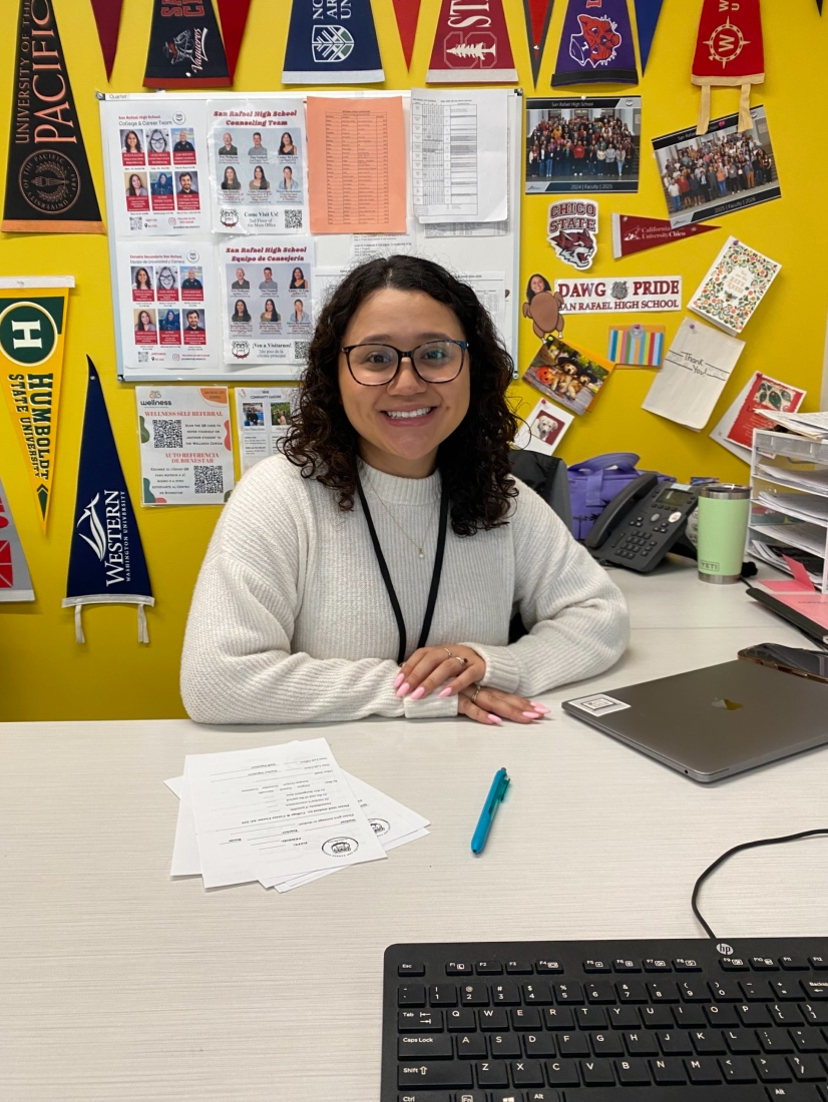
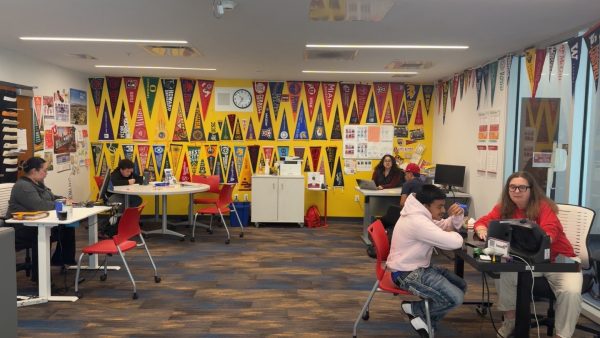
At SR, the college and career staff have noticed a change in how students approach the admissions process and how they respond when plans change. Ms. Alegria said that more students are beginning to take different pathways altogether.
“There’s definitely been a rise in students looking at two-year programs like COM or SBCC,” she said. “ You can still get most of your general education done, and still graduate from a UC if you transfer.”
For some students, this pathway is a lot more predictable for the same end result as those who are sweating over college applications. Instead of going through the complicated process of freshman admissions, they are deciding to go to community colleges and just transfer in after two years.
Still, for many high school seniors at SR, that option isn’t part of the plan. They have an expectation to go directly from high school to a four-year college, specifically UC schools. Nitta says, “I had always envisioned myself at a four-year, there really wasn’t any other plan.” In Marin County, this just seems to be the standard.
This expectation is what makes the college admissions process so full of emotion and stress. For students like Berlinsky, the rejections do not just decide where they attend college, but invalidates all the hours or even days or weeks of work they put into the process.
After getting rejected by all of his California schools, Berlinsky adjusted his plan at the last minute. In the last days of April, he submitted an application to the University of Utah, available to him because of their rolling admissions process. He heard back within a few days and was accepted, committing out of necessity shortly after.
This transition was not what he had originally envisioned for himself. He was slowly veering off a path that seemed set in stone, going all the way back to middle school. The next steps in his life went by very quickly. He had to get random housing assignments, unfamiliar roommates, and a new place, which was far from home. Even with all this uncertainty, the outcome was better than he originally thought it would be.
This sudden change of plans also made it so he would have to pay far more for college than he initially expected, with the tuition at Utah for out of state students being over 30,000 a year. Normally, California students would be able to get the Western Undergraduate Exchange, which allows out-of -state students to receive in-state tuition at schools like the University of Utah. However, since Haden applied at the last minute, he was not granted this privilege.
Compared to the average in-state tuition of all the UC’s being around 15,000, this was a massive financial jump. He will have to take out loans to finish out his college education and then pay off that debt for many years following his graduation. The rejection from California schools not only hurt him mentally, but also financially.
He is currently a business major and has quickly adjusted to life in this new place. He has made a bunch of good friends and has earned all A’s throughout his freshman year. What began as a backup plan has now become his whole life. He plans to remain in Utah for the foreseeable future.
His experience reflects a broader reality facing students across the state. The admissions process has become much more competitive and seemingly random at times, but the pathways that students have, instead of the typical 4 years, are a lot more flexible than they first seem. For some students, it means finding success at a school that they had not originally wanted to attend. For others, it entails taking a completely different path, whether that be through transfer programs or alternative institutions.
Whatever path people decide to take, it is clear that a linear, single path to success is quickly becoming less common. There is no formula or cheatsheet. Instead, students are going through a system where all outcomes are uncertain, expectations for the younger generation are high, and learning to adapt and live has become an extremely important skill.
For Berlinsky, the result is not what he originally had laid out, but he has adapted and been able to make something out of his situation. For students all around the country, that is the best they can do.