





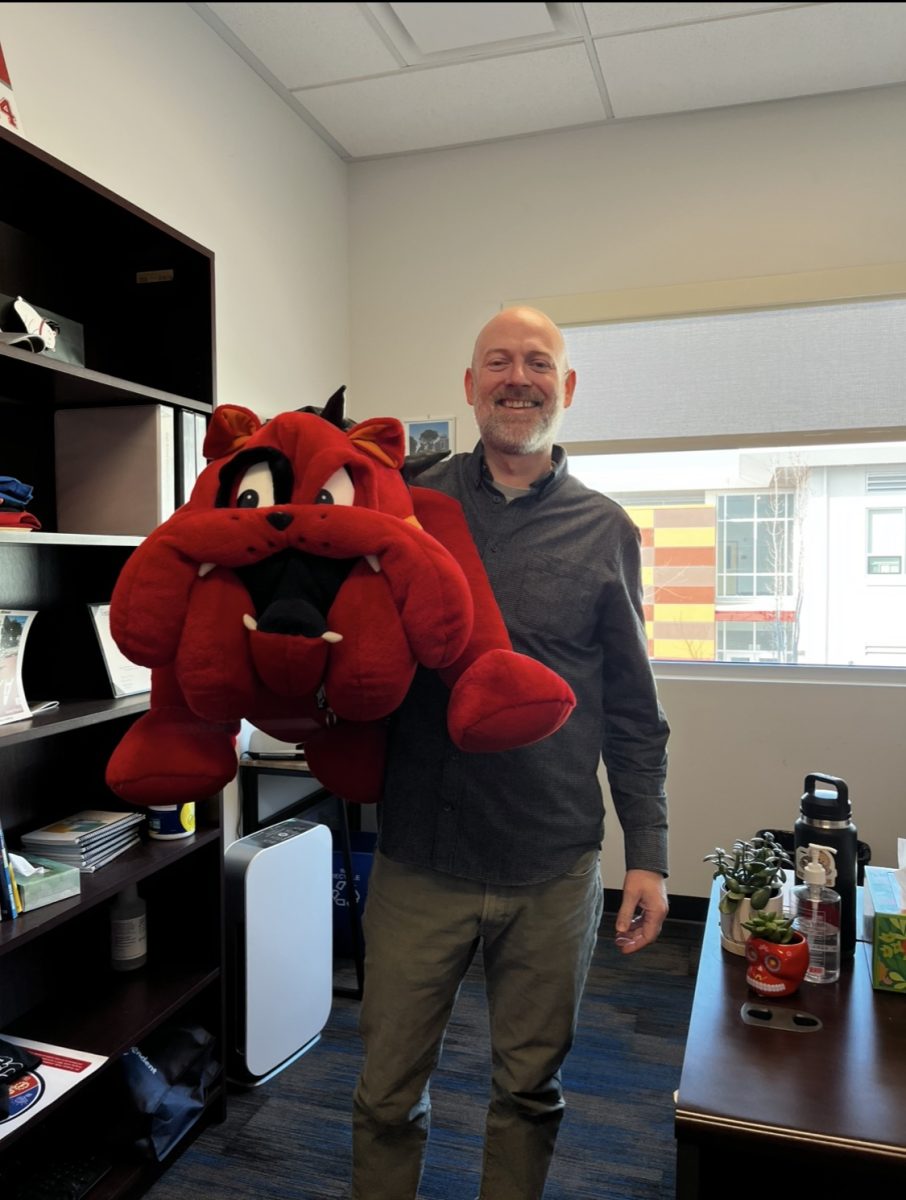

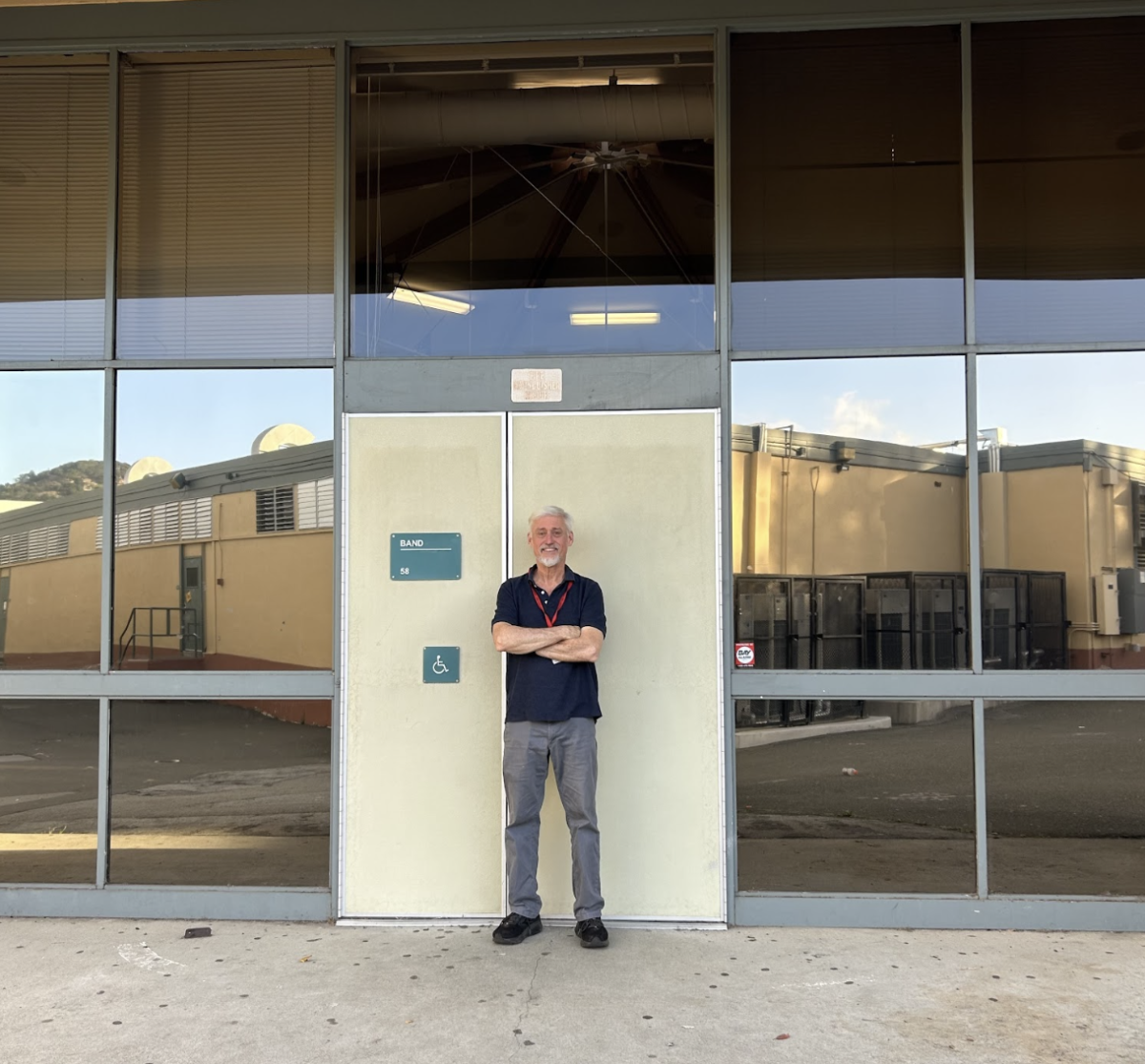







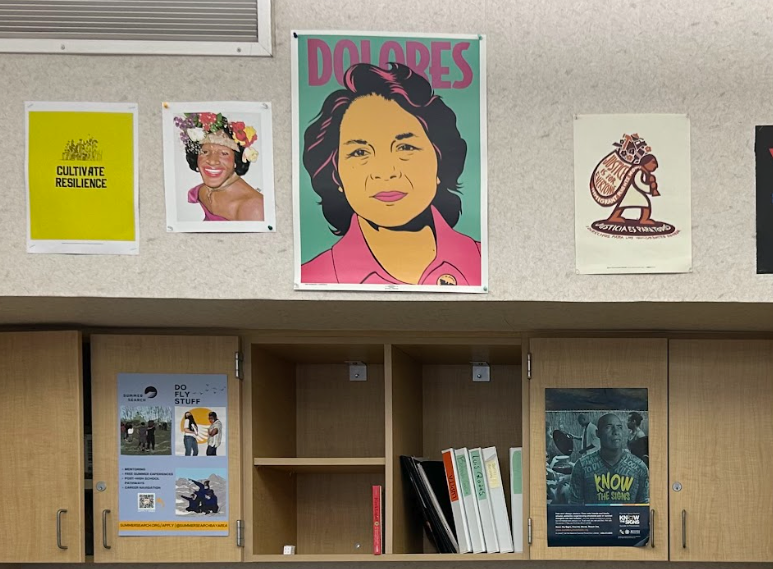











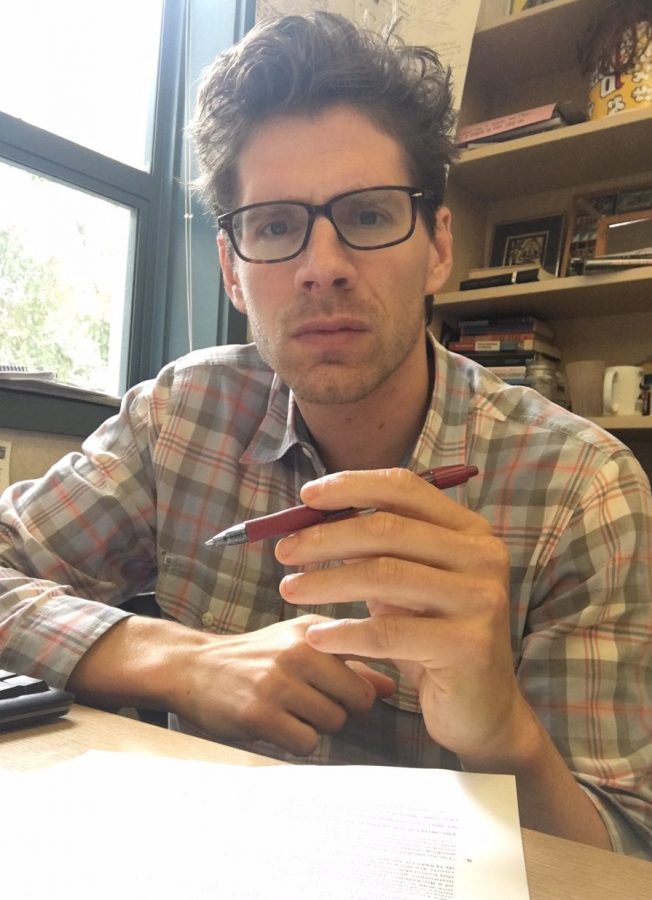
The air is filled with the many scents of an art classroom. Acrylic paint, Sharpie, clay, and any other medium you could think of. Students are scattered throughout the room, some seated at the taller stools in the back, some in worn-down paint-stained chairs in the front, and some idling in the middle. Between them walks Chris West, an art teacher and successful local artist. For Chris, teaching is a way to show students impactful lessons, not just about art, but about life as well. “I want people who take a class with me to find things in what we do to be applicable in other parts of their life,” he says.
Chris has been working at College of Marin for 15 years, where he teaches classes and manages the gallery on campus. This allows him to help guide students while working, then show off their skills and unique talents to the public.
The way he teaches a subject, such as art, that is heavily based on subjective opinions, is by trying to guide students in a direction outside their comfort zone. “When people try something and they embrace being bad at something, and they watch themselves get better,” he says, “I feel like it encourages them to be more courageous in other parts of their life.”
Being able to help these students express themselves also helps him to become a better person as well. “I feel super lucky to be able to watch this happen at work, when people have ‘aha’ moments, or discover something,” he says, “It makes me feel good when I go home, and I’m like, ‘All right, cool.’” This mindset is key to teaching art, as there is no right or wrong answer, just a learning process and final product to create.
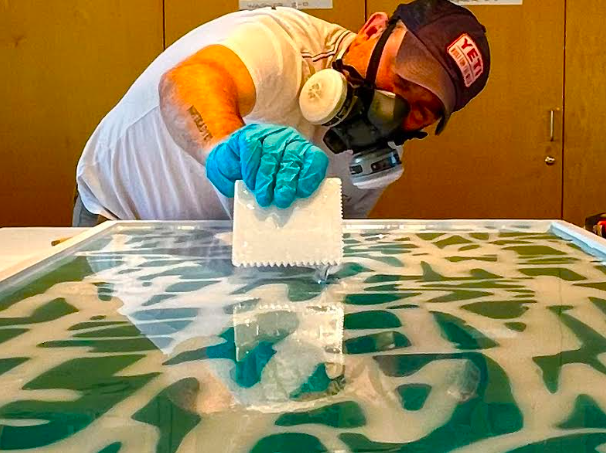
Chris, however, never intended on doing anything artistic, saying, “I thought I was going to be a pediatrician.” He grew up in Northern California, where art was never really a goal for him. However, he changed his major in college, and began to focus on art. This interest in art derived from his curiosities about hieroglyphics and graffiti, which he was involved in during high school. His current art reflects these ideas, with usage of wording and symbols.
An early mentor taught him one of the many ways to teach art. She was “classically trained as a communist propaganda artist,” who would “make these beautiful drawings look so easy.” This daunted Chris at first, but was able to help him understand that every person has a unique style of art, and that you need to step outside your comfort zone and experiment to find it. These ideas have transferred to his teaching.
Aside from teaching art, he is still making art of his own. One of his more recent works, The Spaces Between All The Things I Shared With You, reflects one of his most unique art styles. “It’s kind of like an homage to home.” He said when asked about the inspiration for the piece. “I did a lot of stuff about the natural world (the tree branches) pretty much stemming from the fact that I’m homesick.”
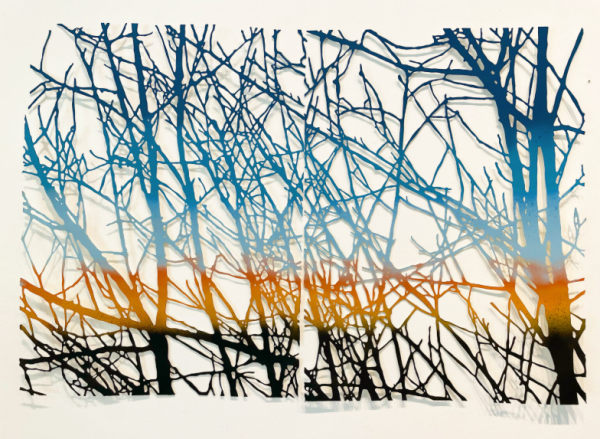
Another one of his most striking pieces is titled Easy Like Sunday Morning, with the name coming from a song with the same one. When he made it, he said, he wanted to “try and make something beautiful out of… kind of a mess.” There are many of these pieces, which are all inspired by songs and all come from a sort of place of artistic intuition Chris has. They came during a time where “everyone was talking, but no one was listening,” and are meant to represent the effect of making words meaningless once repeated too frequently.

Luca Notti, a SRHS student who has also attended one of Chris’s art classes, says, “His teaching style is like nothing I’ve seen before, I’m not an artistic person by any means, but the way he guides us through things makes us feel as if we’re doing things right.”
While also attending his sessions, I can attest to this. His approach of leading students to an idea, but not forcing them to come to the same conclusions, is what sets the teaching apart.
For example, one of the projects we worked on was to design a fictional product. We would need to come up with this item, then create a physical product for it. With help from Chris and the students around us, we were each able to create something that was personalised, and reflected our unique styles. Luca’s was very formal and professional, another expressed his love for superheroes, and my personal favorite was one that used a bunch of bright orange paint, which became that student’s signature color.
Through his numerous years of teaching, Chris has helped guide many. He encourages students to step outside their comfort zones, and apply the creativity and problem solving abilities to “encourage people to live a more artful life.”
