

































Among the industrialized nations across the globe, America is the top country experiencing homelessness and a housing insecurity crisis. Even though Marin County, California is ranked among the wealthiest counties in the United States, it still deals with homelessness. “The Bay Area is one of the epicenters for homelessness in the country,” says Daniel Cooperman, San Rafael’s Community Services Division Director.
San Rafael carries the highest homeless population in Marin. As of 2022, 74% of the 1,121 homeless citizens were unsheltered, but fortunately that number has rode a decline up until the present. This is why the city feels the population of unhoused individuals more directly than other areas of the county.
Why is San Rafael carrying the majority of the unsheltered population in Marin compared to the other local cities? According to cityofsanrafael.org, “Almost 90% of individuals staying in the encampments have been in San Rafael for more than one year, almost two-thirds have been in San Rafael for more than a decade.” The site also says that several individuals camping here had grown up here as well. They “hope to find permanent affordable housing in this community.”
But this isn’t necessarily the answer to this posing question, in fact, there isn’t really a clear answer at all. San Rafael has always had a population of unhoused folks and “different jurisdictions operate differently in terms of their ordinances, such as camping ordinances,” says Cooperman.
But, there could be another cause for so many unsheltered members of the San Rafael community.
Nearby residents have outwardly spoken and taken action against the city’s plan to solve this problem. According to the city’s last count, the population of unhoused people is around 300. As of November 2025, CBS News says the city has received grants to build 65 cabins that will later be turned into an 80-unit, permanent housing building.
But, a member of Marin Citizens for Solutions Not Secrecy, Betty Shea, claims there isn’t enough transparency in the city. In her Marin Independent Journal letter to the editor, she says that she’s quite concerned with “placing a homeless housing site so close to an established residential area and longtime local businesses.” Earlier she discusses how her husband and her have resided in San Rafael for over 30 years, and can’t fathom the thought of something like this creating “such a disproportionate burden on families and long-standing residents.”
And that isn’t even half of her complaint.
Worried that a construction like this will bring unnecessary disruption to the community, she says, “the risk of increased crime, litter and unsanitary conditions is real.” But the truth is, “the people who will be living there are not a threat to any community. They are human beings, just like me and just like you, they are our neighbors,” says Alicia Owens, a former occupant of the sanctioned camping area, in localnewsmatters.org .
Here we have a perfect example of why homelessness remains relevant, because some people want to pretend like the housing problem doesn’t exist by keeping them as far away as possible from it. She claims that there are other locations that would be more suitable for a plan like this, but the reality is that these people want to pretend like housing isn’t an issue. She states that San Rafael hasn’t “engage[d] openly with the community.” Yet Daniel Cooperman discusses how the new housing plan has been talked over during city and housing committee meetings. In fact, you can even view the News and Updates section on their website right here.
Though all of these factors play into why homelessness in San Rafael stays relevant, the expense of housing could be the biggest cause that Cooperman has seen. “Income, that’s the very short answer.” The lack of affordable housing is the main reason people end up homeless.
The lack of long-term government funding doesn’t help this issue either. Though the city was lucky to receive a six-million dollar grant from the state to fund the Mahom path program and sanctioned camping area, that was certainly a rare occurrence. “For homelessness funding to be successful, it has to be continuous, not cut-off.” Says Daniel Cooperman. Programs need to have the ability to grow with the population, and if the city doesn’t have the money, then it cannot do so.
But nonetheless, institutions in Marin are working hard to solve the housing crisis. Homeward Bound is a Marin organization “committed to ending homelessness in Marin County.” They opened in 1974 as Marin Housing Center and in 1996 changed to Homeward Bound Marin, solidifying their mission to bring “safety, dignity, hope and independence.” They service shelters specifically for families, adults, veterans, and even mental health support.
This organization also has the help of what is called CES, also known as Coordinated Entry System. This is a process in which citizens who are unhoused, sheltered (in emergency/transitional housing), or fleeing domestic violence can be assessed, evaluated, and connected with a solid housing plan that fits their situation. CES uses “a system-wide Housing First (no barriers to entry) approach.” This ensures all unhoused people get a chance to be evaluated and provided with at least some service.
Like any other city, San Rafael is trying to make use of the funding they do have. CES has the tricky job of trying to get their resources to those who are most in need. “It’s really challenging,” Cooperman admits. Figuring out if there’s enough of one or another service is just another reason why there’s so many folks on the street.
But there is still hope. This permanent housing plan is in no place to be shut down or rejected (despite certain citizen backlash). LocalNewsMatters.org says, as of October 20th, 2025, that, though the site, located near Merrydale road, is currently temporary, “the city has agreed to zone and permit for permanent affordable housing by June 30th 2028.” Until then, this zone remains a safe-haven for unhoused citizens in San Rafael.
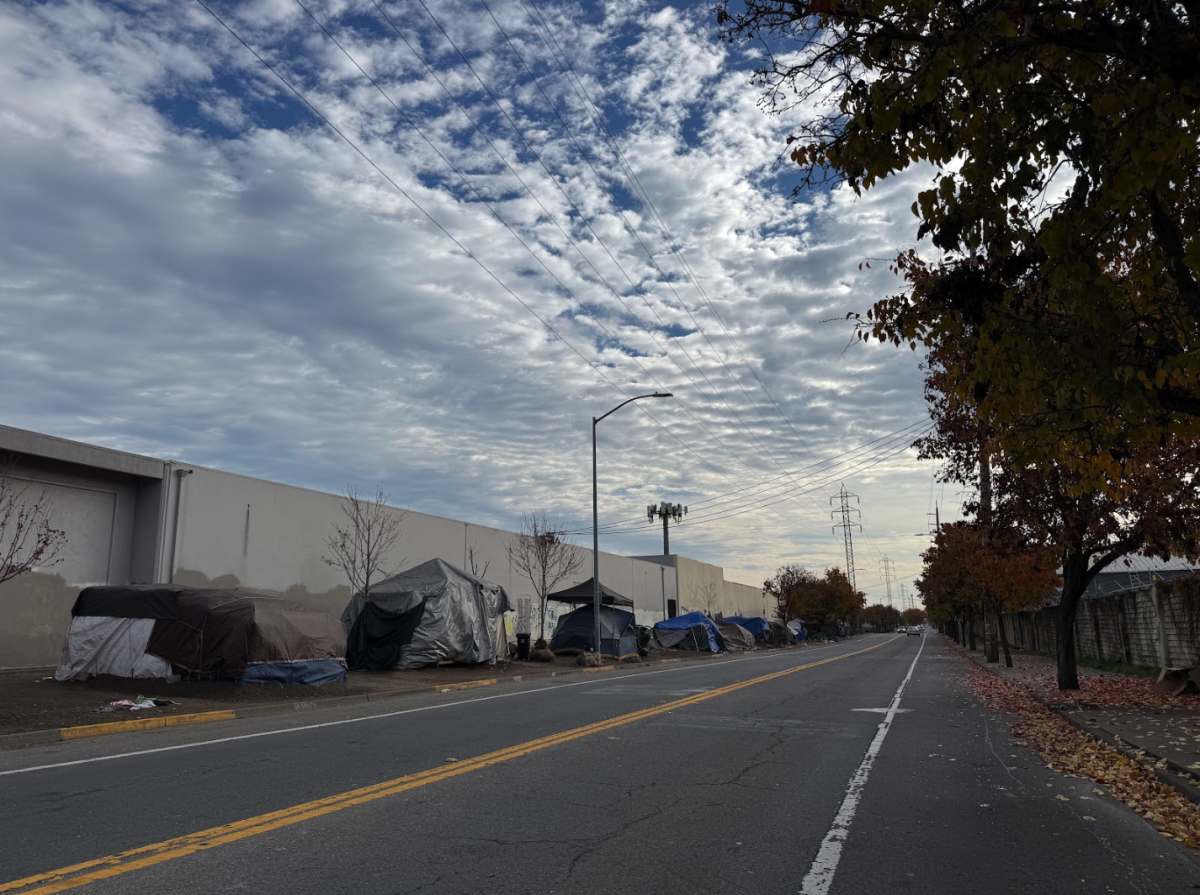
“Many live in unsanctioned tents on Anderson Drive and in a nearby temporary city encampment that will soon close,” says CBS News. If you live in San Rafael, it’s almost no doubt you’ve probably noticed the encampment CBS is talking about near Anderson. Marincounty.gov says “those residing along Anderson Drive in downtown San Rafael” will also be welcomed into this safety zone for unhoused people.
Some may feel tentative about how San Rafael is dealing with the housing issue. Especially with the SNAP payments being defunded when the government shutdown was in place, more may wonder if they’ve got too much on their plate to succeed. Some may think they should handle this issue as far away from residential areas as possible. “We certainly rely on outside funding,” Cooperman notes, “A lot of government funding is very short term, folks are waiting for the next batch of grants to be released, that’s a challenge when trying to increase/maintain services.”
But the city has been dealing with this for many years now. This isn’t just something the city’s leaders have to face, it’s something that we as a community have to face. We should have trust in our community’s leaders as well as our fellow neighbors, whether they be homeless or not.
Despite the differing opinions among San Rafael residents, the city and its organizations are doing an incredible job at dealing with San Rafael’s housing situation. This “first-of-its-kind project for the North Bay” is simply succeeding at making the lives of all San Rafael individuals comfortable, not dirty or drug-ridden.
