



























Picture a slow-motion movie. That’s how drawn-out California teachers’ negotiations are. Every tiny step forward is carefully planned, like a chess match where each move takes weeks. So, the question that got me wondering was: how is this slow approach beneficial to our schools and teachers?
Recently, there have been many teachers who are demanding a raise all throughout the state of California. This is because of many contracts that have expired and budget cuts. I started to question if it was happening in our community at schools in the San Rafael City School District, such as Terra Linda and San Rafael High Schools.
Teacher negotiation in California is a process called “collective bargaining,” where a local teacher’s union and the school district negotiate a contract covering wages, benefits, hours, and working conditions.
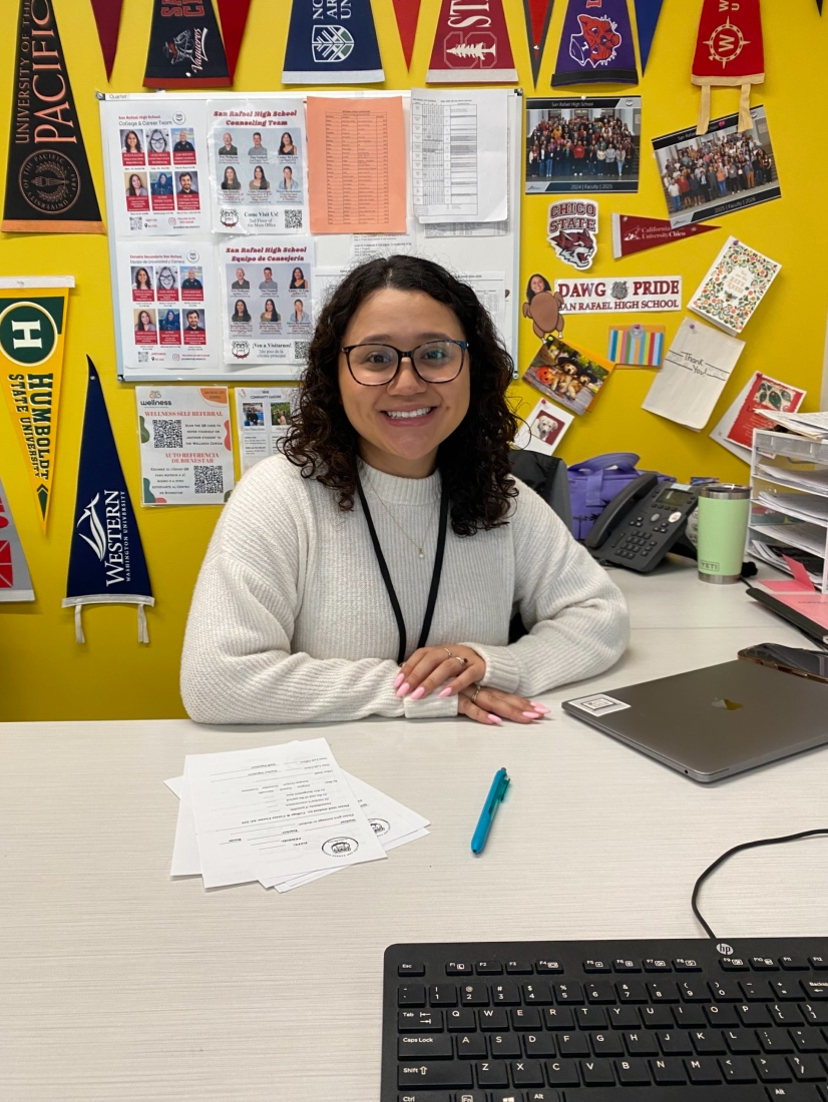
I interviewed Ms. Morgan, a current teacher at SRHS, hoping to get the inside scoop on what they are doing to negotiate, so I could better understand why this process was chosen.
“We are basically being told that there is no money for a raise. And our argument to the people who are in charge of this is that, yes, there is money for that. They just haven’t budgeted and budgeted for that to give us that raise,” she said.
An article I found on California teachers’ negotiations from a site called LaborNotes, said that “Public school educators in 32 union locals across California are joining forces to maximize their power in a campaign called ‘We Can’t Wait.”
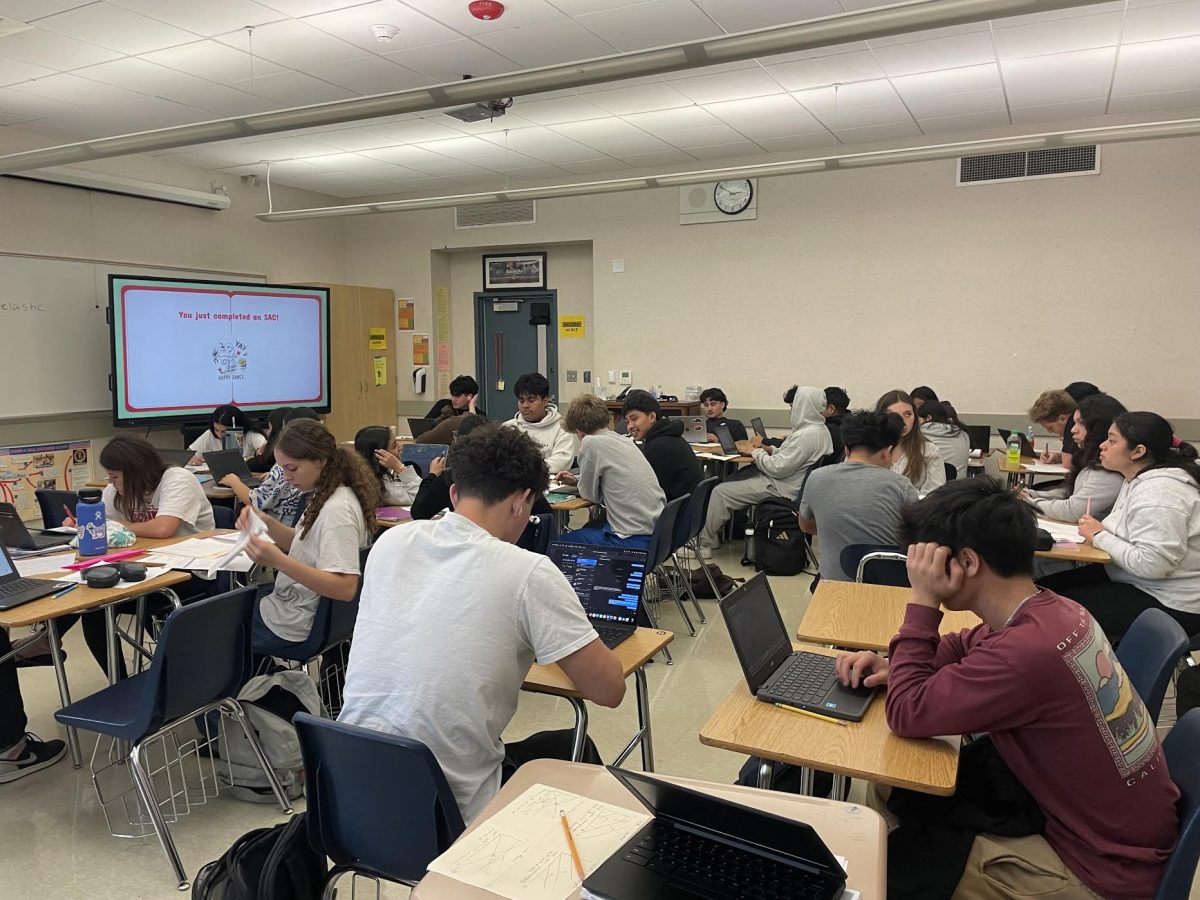
Currently, teachers at SRHS have seen a decline in students due to too many FTE. If you’re wondering what “FTE” stands for, as I was, it stands for Full-Time Equivalent. This is a unit of measurement for the workload of employees. It’s used to calculate the total hours worked and compare them to what a full-time employee’s hours would be.
“I think a lot of people in the public think that teachers don’t get a contract or teachers don’t get a raise, and they instantly go on strike. But it’s nothing like that, it’s a month-long process, mediators will get involved, etc,” Alexis Morgan stated.
And she is correct. Before researching, I wondered, Why not just go on strike now? I thought that would be the better solution, but being patient can have its benefits. Usually, the process might not get a lot of traction, so there are other things teachers have been doing to promote this argument. One way is by teachers wearing matching shirts to show their unity.
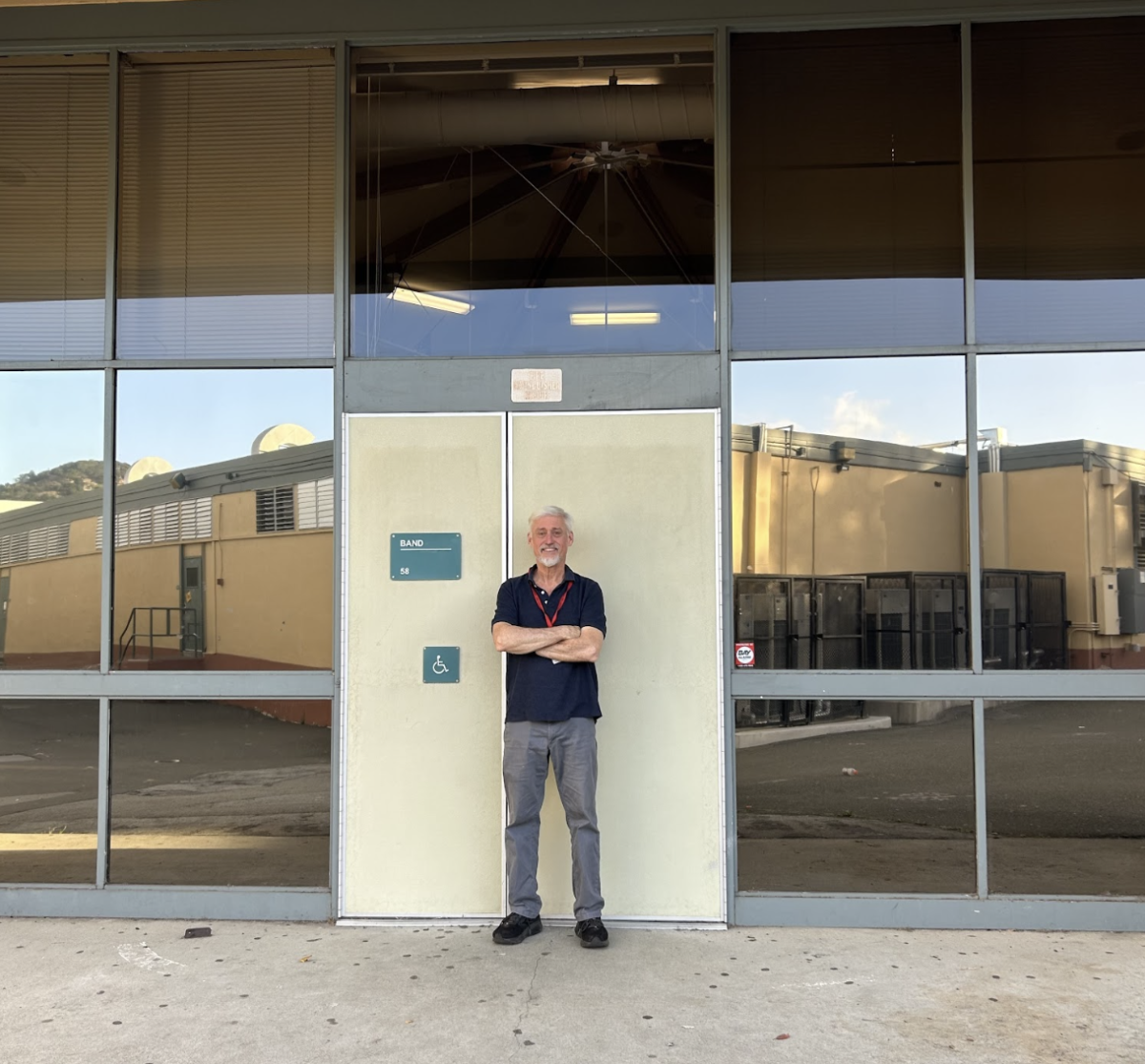
Mr. Cretien, an SRHS union negotiator, said, “In previous years with disputes over compensation, we’ve sent 50 to 100 people to the board in order to show solidarity.”
Teachers have also been meeting every six weeks to negotiate with school boards in California. “There are a lot of meetings that go on that you wouldn’t see behind the scenes, both with our negotiators and the executive team,” said Morgan. Their next steps may be seen in January to February of 2026, such as informational picketing.
I’ve noticed that when other school districts in surrounding areas make a big decision, such as deciding to collective bargain, other districts tend to follow the trend, and Ms. Morgan agrees. “Novato is not our school district, but often when one school district is making extreme cuts, that seems to affect the perception, or like what other school districts do. And Novato is often kind of a bellwether for our district,” she said.
An article from the Marin Independent Journal published November 27th, 2025, stated that “the Novato Unified School District has approved a plan to cut $4.5 million in costs to stabilize the general fund budget for the 2026-27 school year and beyond. The reductions in staffing, supplies, and services grew from $3 million in estimated cuts when the district adopted its $131.5 million 2025-26 budget in June.”
Some say this topic could be considered controversial, but I find it very informative on how we can benefit from gradual patient negotiations rather than jumping straight into a strike or protest.
While protests are a good way to showcase opinions, teacher compensation is deeply intertwined with complex economic, political, and social factors that demand careful consideration. This led me to believe that collective bargaining is the way to go.
As Mr. Simensted, a union negotiator and English teacher, said, “What’s pretty good for people to realize is that working people have to have a voice, and the only way they can is if they come together.”
