

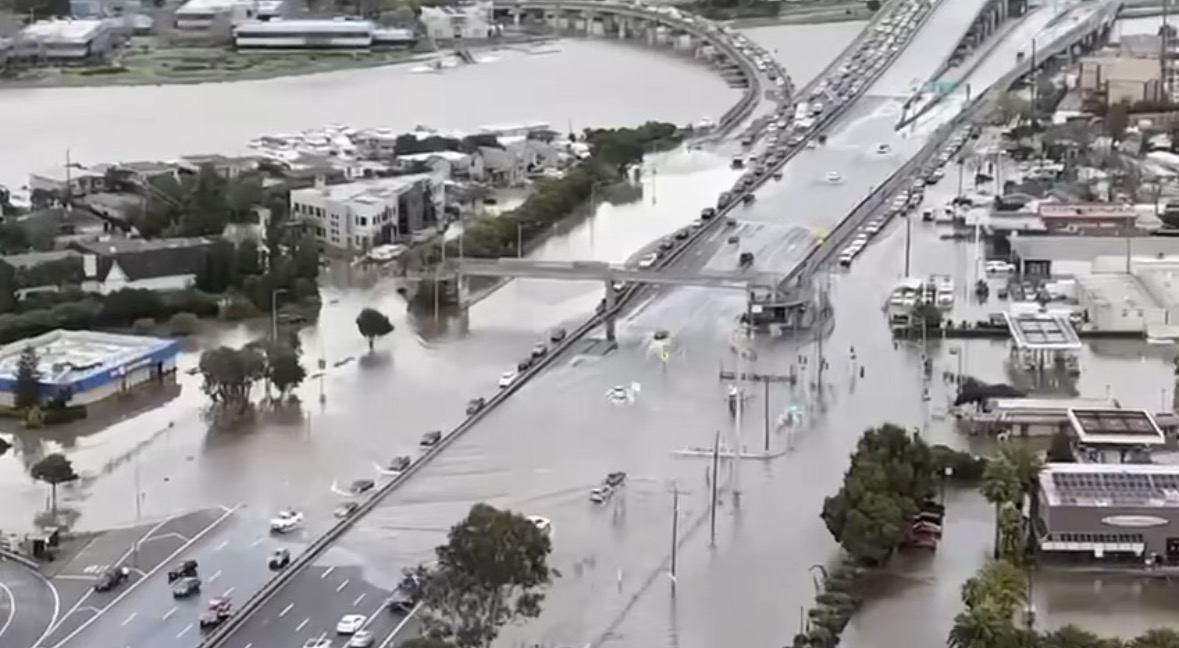

























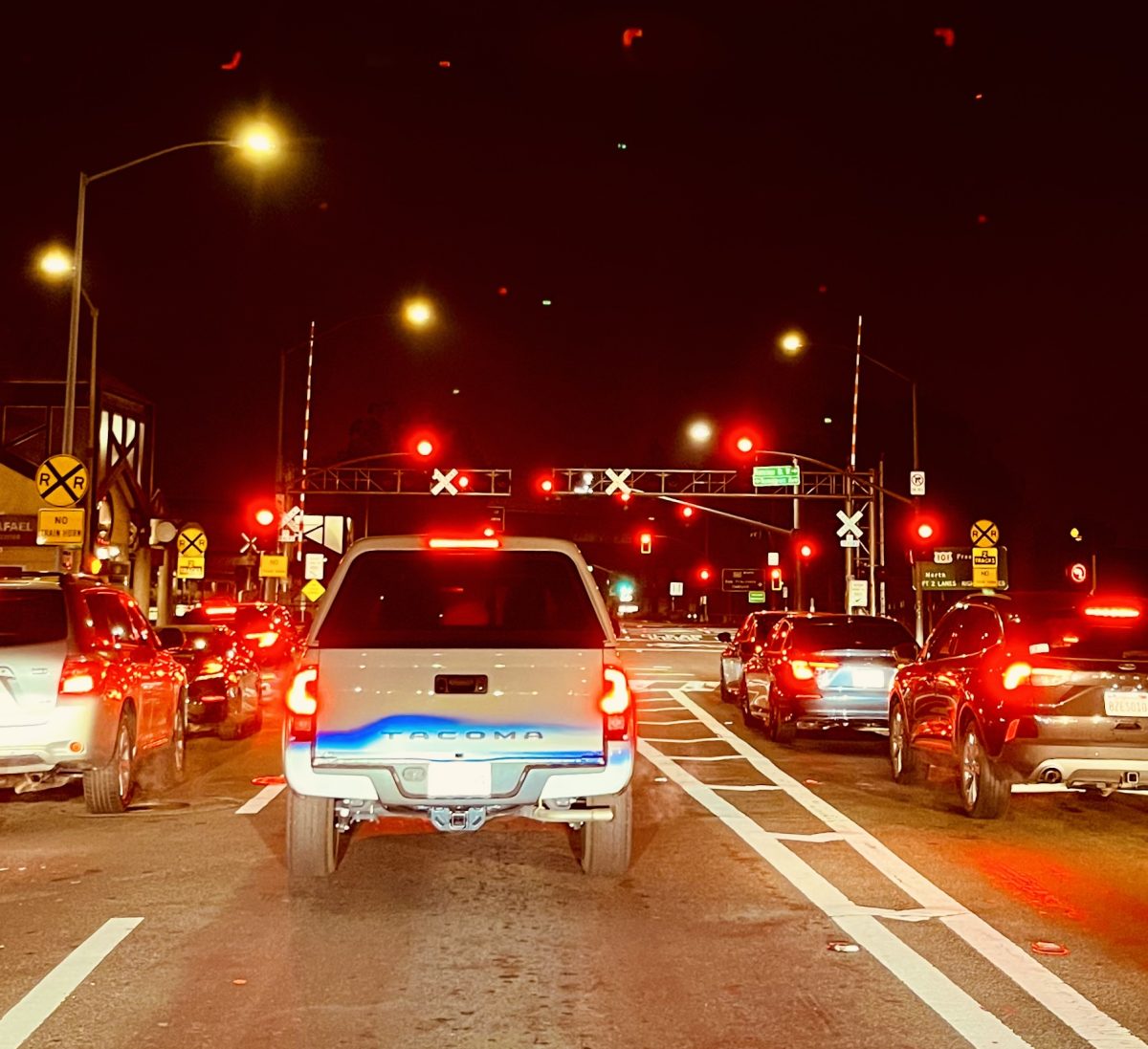
When driving through downtown San Rafael, one of the worst things that can happen to anyone are the blaring alarms and flashing lights of the SMART train. This train has the amazing ability to turn a 5-minute commute into a 30-minute headache, not to mention the miles of backup caused on the highway. These are not only inconveniences, but could lead to dangerous consequences, such as blocking emergency responders and causing increased collision rates.
In 2016, there was a plan to install a taxpayer-funded train system, which had a station in downtown San Rafael. The initial idea was to reduce traffic on Highway 101 and save people money, according to Govtech, which reported that tickets ranged from $1 to $3 per stop. By August of 2017, the train station was built, and the train was operational. However, problems began to arise immediately.
The location of the train created a bottleneck for getting on and off the highway it was designed to reduce traffic on. When a train stopped at the station(or two at times), the entire exit ramp of 101 would become blocked off, as cars needing to turn right were unable to. This issue was prominent on the entry ramp as well, with no cars able to get on it, pushing traffic downtown. What most people don’t realize is that there was initially a plan to build the train tracks above the road, but this was deemed an eyesore and would cost too much money. This has been put into question in recent years, as many 10+ story buildings have been approved to be built mere yards away from the train station.
Another issue the train causes is immense traffic during heavy commute hours. San Rafael High is located across the track from where many students reside, meaning they need to cross it at some point. Due to its close vicinity to the highway, where many commuters go, one poorly timed train can cause traffic to back up as far as 11 blocks, and through the entire town. “I have trouble making it home during my free 5th,” says Sherwood Critchfield, a senior at San Rafael High School. “It can take 40 minutes sometimes, I get stuck for 5 light cycles even.” This is not only an inconvenience but a potential danger to people’s lives.
In San Rafael, there are two fire stations, both within the vicinity of the train’s traffic. If a traffic jam is currently happening, and a truck needs to respond to an emergency, there might not be a way for them to get through the traffic. They can stop the trains from crossing and lift the gates, but this takes much more time than if the train were not in the way, and that’s not including the massive amounts of cars built up. These delays could mean the difference between a small kitchen fire, and a raging inferno.


One of the main reasons the train was built was to remove traffic from Highway 101. This, however, has not gone to plan. One study done by KQED comes to the conclusion that there is little to no difference in the traffic on the highway, and the number of riders is lower than expected. SMART carried 750,000 riders in 2023, for a total of about 16.6 million miles. However, about 1.8 billion miles of ground were covered by cars in the stretches of highway near the train’s operation. It’s not doing much to improve highway traffic; with any good it’s going to be wiped away by the frequent backups.
Another inherent danger is the amount of lights, lines, and signage surrounding the train. There are three back-to-back street lights, which are not in sync, and I have personally seen them run many times. These are especially difficult to navigate at night. The amount of pedestrian collisions in the areas around the track seems to be higher than the rest of the town, according to a City of San Rafael study, and there are more fatal accidents, concluding that the cars are traveling faster around these points.
Even with these downsides, some people claim the benefits of the train outweigh the drawbacks. Some groups, such as the Gm Report of 2020 on the train, have concluded that 8.1 million pounds of CO2 emissions have been saved. However, a similar study by The Press Democrat examining the impact of the train found that the 2020 study did not include people carpooling to work. With the lower expected rider numbers, the amount of CO2 per rider is still about the same as the average commuter in San Rafael.
Overall, the poor planning, structuring, and execution of the San Rafael SMART train have caused nothing but burdens for the town’s residents, with no real or lasting benefits. My way to fix these issues would be to scrap the planned extension of the line to Cloverdale and use that money to build the track in downtown San Rafael above the road, solving all major issues with the train in one go.

MacG • Jan 7, 2026 at 12:15 pm
100%. Myself and others raised all of these points in town forums and letters to editors. However the experts knew better and were willing to accept traffic issues over the cost of elevating the tracks. Then again, with the transit center move planned one block to the north even that platform would have been in the wrong place.
The iedealistic notion of cars going away and these types of social engineering of putting pressure on drivers to change their mode if transportation has got to stop.