
























Your phone illuminates your face a digital blue as you are sprawled out on your bed. You lack motivation to tackle homework or fold laundry so you scroll through your phone effortlessly. As you swipe through video after video, there’s no doubt you stumble upon a “what I eat in a day” or “come with me to the gym” video. You might see someone taking mirror selfies, flexing their gains, or explaining the next health craze.
This inescapable digital loop is a familiar reality for SRHS students like senior Avani Mahyavanshi. “I will come across some [fitness content] on my feed no matter what,” says Mahyavanshi. They either serve as a form of motivation or kick you when you’re down. Often, these mainstream wellness rituals are guilty of being performative and prioritize consumption over authenticity.
SRHS senior Quhyn Anh can attest to this downside. “Once you start watching influencers you compare yourself [to them],” says Anh. Social media wants to keep you hooked on their platform, designing algorithms that can continue a cycle of self-doubt that we feel when we continue to seek more advice [online]. Our self-doubt can make us, in turn, want to mimic what we see online by “doing exercises that don’t quite fit you,” says Anh.
Furthermore, a 2025 article by Charlotte Troncy published on Medium, an online social network and blogging site, explains that exposure to this type of fitness content “leads to unrealistic body expectations” that can evolve into “body dysmorphia and the partaking of dangerous trends.”
Aside from the harm of clickbait when depending on social media for health advice, it is important to recognize how highly accessible and knowledgeable it truly can be when used thoughtfully. It educates teens who commonly use it as their primary faucet of information. The digital wellness sector is a double-edged sword, influential in the lives of adolescents.
FITNESS LABELS ARE MID
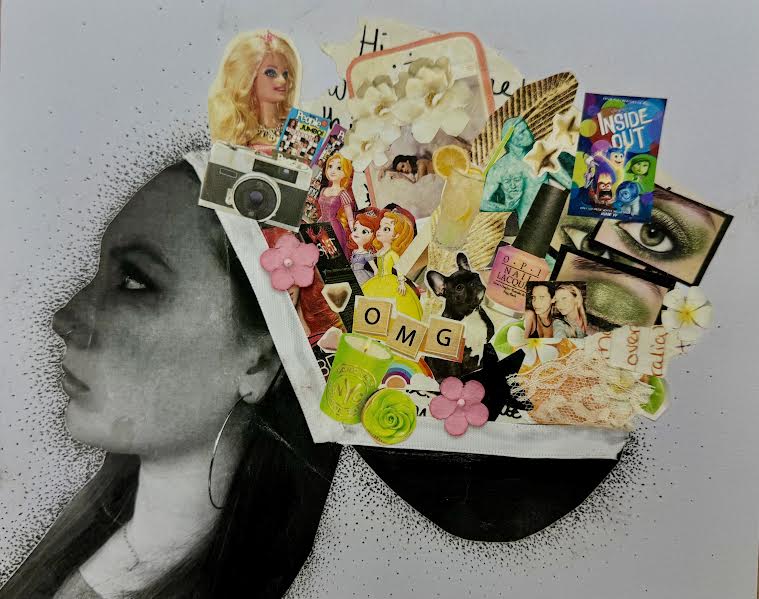
Scrolling through our own social media feeds, we girls are no strangers to the perfectly curated image of the “Pilates Princess.” In the world of the “Pilates Princess,” physical exertion is a second to the ultra-feminine, luxury focused aesthetic – one built on a foundation of color coordinated sets, sleek buns, and the lifestyle-branding of a handheld matcha.
“There’s a big focus on aesthetics rather than how working out can make you healthier and stronger, which is what it should be. They [influencers] are pushing an agenda of being skinny, lean, [or being] this buff that messes with peoples’ body image and expectations and understanding of reality,” says SRHS junior Emma Lawson.
The visual branding of the aesthetic misrepresents the dynamic nature of Pilates. “There are a lot of misconceptions about classes like pilates,” says Michele Vaughan, Pilates instructor and Kinesiology professor at College of Marin. Pilates can consist of “strength training for rehabilitation or a strenuous workout vigorous enough to challenge skilled athletes,” according to magazine author June Kloubec. “Some students come in expecting a gentle stretch session; they’re often surprised to discover how much strength is involved—especially in the core and upper body, ” adds Vaughan.
Zooming out, this obsession with aesthetic goals rather than “functional health” mirrors a broader, more concerning shift in how we perceive physical fitness.
SRHS P.E. teachers are increasingly noticing the influence of social media on their students’ fitness perceptions. Catherine Healy, P.E. and health teacher, tells us that she shares what she reads online with her students, encouraging them to be critical of the information they are reading and to “trust science.” There is a disconnect between health and wellness trends and the actual act of practicing an exercise routine like pilates. Efforts to mimic the superficial nature of what you see online can alienate and discourage you from acquiring the true benefits of physical activity. The challenge for us is to peel back the picture-perfect lifestyles consumed online and refocus on fitness with a genuine purpose.
While “Princess Pilates” thrives on the promise of a lean physique, its masculine counterpart, “Gym Bro,” emphasizes muscle mass and personal records (PRs) among teenage boys on TikTok. Observers may characterize “Gym Bros” as the guys you almost always see at the gym, flexing their muscles. However, those within the community often view the label as a literal reflection of their identity rather than a superficial social media trend.
As Constantine Martin, a senior at SRHS, explains, “Yeah we often times call ourselves “Gym Bros” because that’s what we kind-of are but if it’s just a question of it sounding funny or being a trend we don’t view it in that way,” suggesting that for participants, the term represents a genuine commitment to their fitness goals rather than just a viral phenomenon.
SRHS senior, Nico Rossini, who participated in crosscountry and track and field told us he has a private coach through his sports team that advises him on exercises to prevent injuries and maintain athletic performance. This also demonstrates teen seriousness about pursuing health.
#NUTRITION
“What I eat in a day” or “My meals for weight loss” fill Instagram’s health world. Internet figures constantly review diets and advertise their success and benefits. It’s popular to see people plate their dinners following diet guidelines. This exposes consumers to different nutrition styles which have mental and physical effects. Exploring new recipes online is a great way to expose people to new foods and meals.
The online cookbook has become a prominent place for nutrition inspiration. As social media becomes more and more accessible, it has become a home to sharing home-cooked recipes. “Seventy-two percent of 18–27-year-olds get food ideas from platforms like TikTok (84 percent) and Instagram (75 percent),” according to a California Post article published in August of 2025, which unpacks a survey, discovering Gen Z sources most of their meal planning from social media. The recipes online range from complex cultural meals to simple and quick dishes for a busy and hectic day. Whatever it is, adolescents have been favoring video recipes for nutrition inspiration.
However, “very restrictive plans that totally eliminate food groups can lead to an unhealthy relationship with food and a very restrictive eating pattern,” says Brittany Werner, a registered dietitian and coach at Working Against Gravity. An anonymous student also notices an increasing fear of certain foods which are typically considered safe in moderation” on social media. Like sugar for example, some diets view it as a deadly sin whereas sugar is actually fine and even necessary with natural sugars.
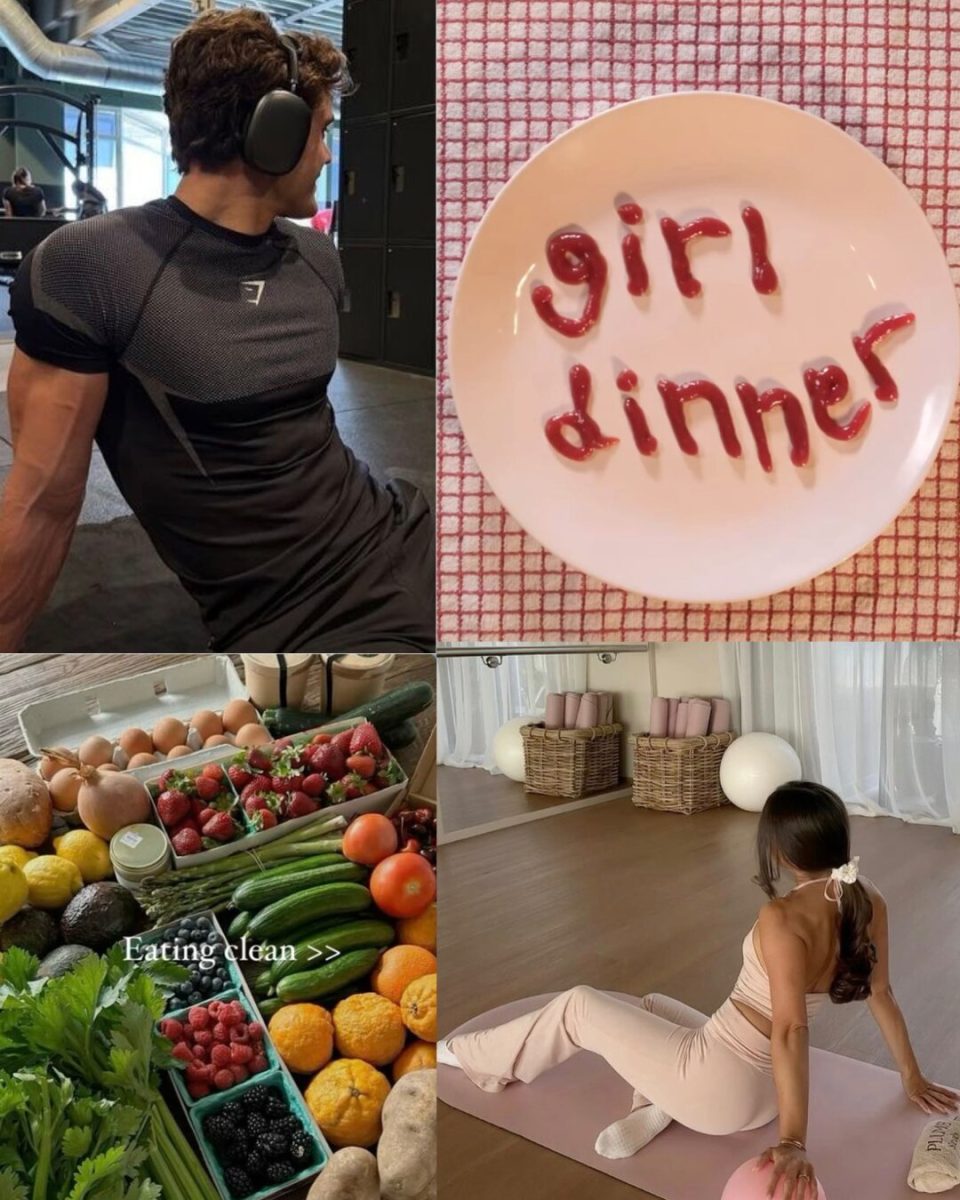
Alongside diets, nutrition “hacks” have been making an appearance. An evident one is “Girl dinner,” which is promoted as eating a simple and small snack plate for dinner. Some videos will include a caption along the lines of “This is my girl dinner” and showcase people preparing usually humble, diverse platters.
I posted once a picture of an oily green onion pancake, a bowl of apple sauce, a handful of veggies, and the caption, #Girl Dinner. Although it was meant to be a funny joke, the hashtag represented the incorporation of social media on a teenager’s life. A viral trend among social media, has now been found on my own plate, normalizing and trendifying a weak nutritional meal.
When looking up a pre-gym routine on social media, you’ll most likely be met with a gym rat dry scooping pre-workout and hitting crazy protein goals being the new craze. For context, dry scooping consists of consuming pre-workout powder without mixing it with water. “A trend I used before was dry scooping because it was just much easier although I would recommend using a water bottle,” says Martin.
It’s popular to see people press record when they are taking their protein and pre-workout powder of the day. Inhaling a teaspoon of powder seems quick and simple. But in reality, the consumer doesn’t know that you can’t breathe and that you have to soften the powder with your saliva.
BEWARE OF FAKE PROMISES
Not everything online is true and it is easy to fall into traps without guidance. It is getting easier and easier to spread non factual information especially on social media. A 2024 study by the American Academy of Otolaryngology–Head and Neck Surgery conducted by Rose Dimitroyannis and colleagues, explored the quality of social media sinus infection and health information in January of 2023. They reported that “less than half of videos posted by nonmedical influencers categorized as educational were factual (46.7%); lay individuals and medical professionals had higher rates of factual educational content (79.9% and 83.7%, respectively).”
Although the study only included 221 videos, it is assumed that a large portion of fitness reals could be non-factual. For the average teenager they consume around 450 reels in 3 hours, meaning that around 200 of those videos could be spreading misinformation.
In a 2024 Heather R. Hayes and Associate article that explores the effects of influencers on social media, the author, Heather Hayes writes, “Many teenagers report feeling as though they trust or know social media influencers personally, which makes them more likely to want to copy behaviors or model the actions they see.” I’ve seen many stories of people trying a product and it having miraculous results and then thinking that I should also try the product. It’s like a chain reaction.
Online figures are always posting and coming up with new content for their page. The activities posted by influencers are seen by many users, exposing people to varying hobbies. Similar to Pinterest, it creates a trend, where more people are trying new interests.
For example, “if a friend starts going to a gym or attending a hot pilates class, now there may be pressure to attend something similar, to be like everyone else,” says Sam Riley, a nurse practitioner at Tamalpais Pediatrics. We users see online communities all the time, such as rock climbing buddies or European backpacking adventure clubs.
“Children and adolescents are still in rapid growth phases and can’t always handle the physical intensity that a full grown adult may be able to sustain,” says Riley. Videos usually contain a person conducting an exercise or sharing broad success, not addressing all the factors. The illusion of online success can be a distorted version of true results.
“A lot of time just because some people will have success, doesn’t mean that it’s gonna work for others,” says SRHS P.E. and health teacher, Mr. Springhorn. For example, when a young user decides to try an exercise online and finds it concerningly hard, they feel discouraged and maybe think something is wrong with them, but in reality there’s nothing wrong; they were just trying something that’s not meant for them.
“A lot of people do different exercises that target the same muscle, so it’s also about personal preference on what you find to work best for your own body,” says Martin.
Social media has become the primary source for teenagers starting their fitness journey. Searching up gym routines and meal prepping is commonplace for adolescents inquiring about how to better their health. Family input and textbook readings used to be the foundation of fitness information. However, the new age of social media, providing immediate and personalized advice can improve health literacy but often lacks expert opinion. Teens are vulnerable to believing appealing, yet unfounded trends.
As you are navigating through your expansive social media feed, it’s inevitable that you will come across popular trends that seem harmless to follow. It can be hard to decipher encouragement from toxic trends. Teens should be equipped with the necessary tools in order to filter this advice.