


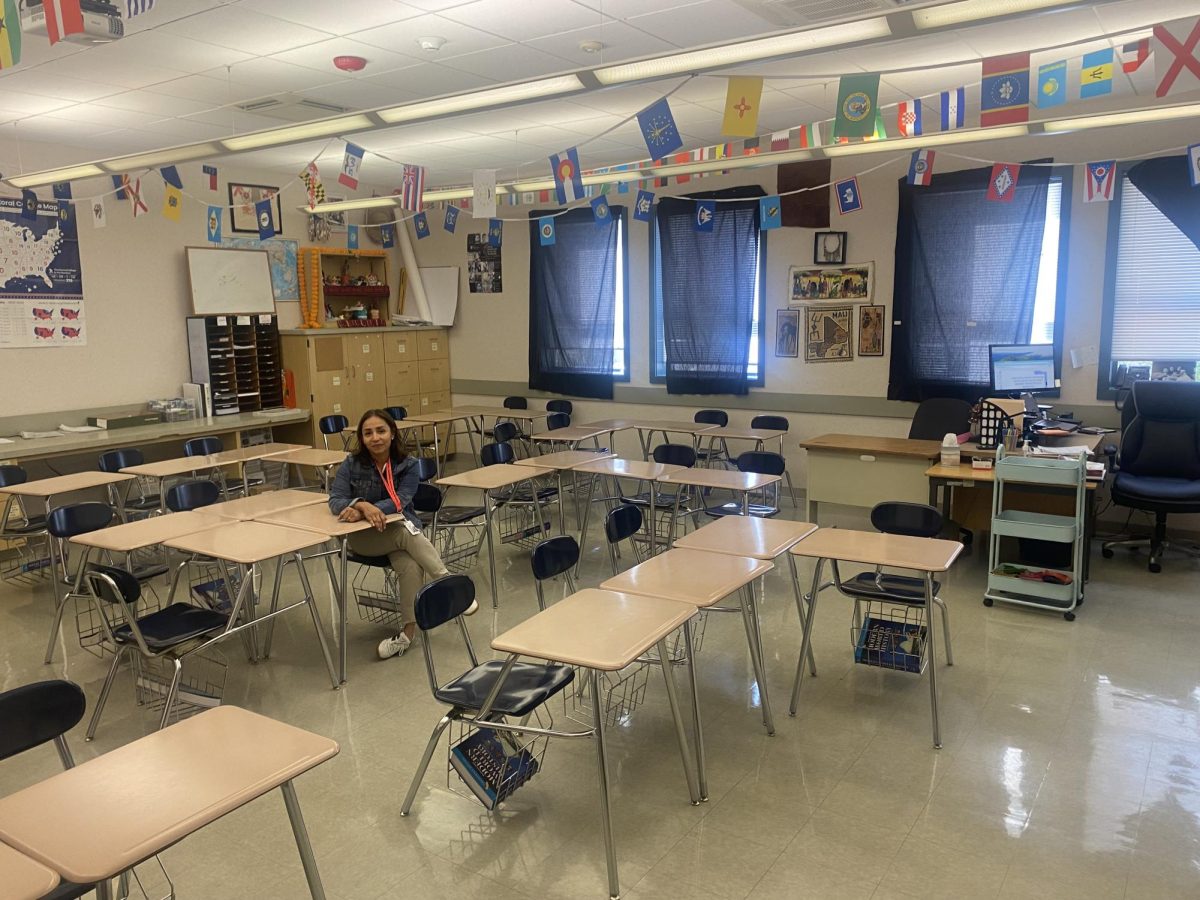



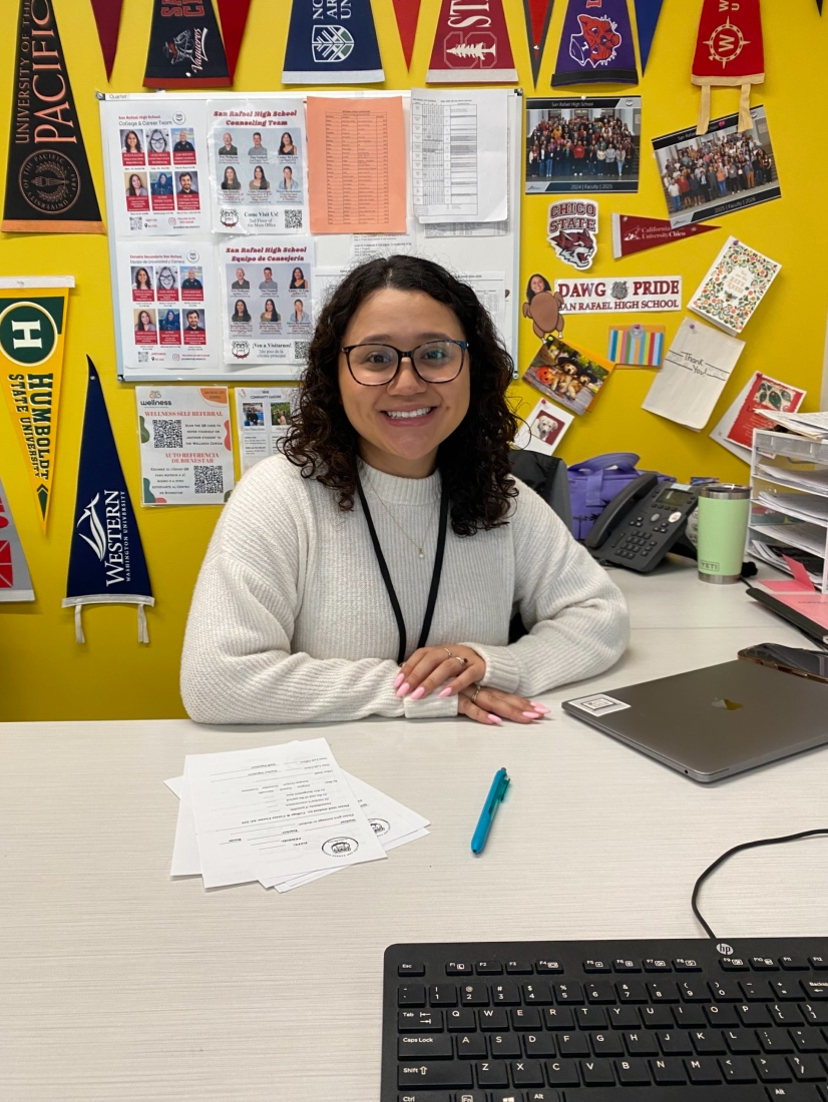
























While we were interviewing one of the San Rafael High School teachers, Sara Chamberlin, she began telling me about how scared she was for her future.
She was scared because she had been pink-slipped, one of the numerous SRCS teachers who are losing their jobs to budget cuts. Enrollment has become one of the major causes of the budget cuts due to some families being scared to send their children to school, as well as many families leaving California. The drop in student enrollment greatly affects staffing numbers at SRHS and school funding. There are also other factors affecting the school and leading to budget cuts, such as the end of COVID-19 pandemic funding. After the COVID-19 pandemic, the government removed most school funds that had been implemented during that time. As those temporary resources disappear, the district is now forced to make difficult staffing and program decisions.
San Rafael City Schools superintendent Carmen Diaz Ghysels said that SRCS received roughly $6 million in funding from both the state and federal governments since the 2023–24 school year.
That funding will end at the conclusion of the 2025–26 school year.
Chamberlin and I talked about how she had immigrated from Italy to the U.S. to continue building her life. She spoke passionately about her journey and her strong desire to become a teacher. She mentioned how much she enjoyed being around students and colleagues who understood her and appreciated her bubbly personality.
“I can see that there are some values I grew up with reflected in the culture of the school,” Chamberlin said. She has a strong passion for teaching students a new language and encouraging them to strengthen their second language skills, which led her to start an Italian Club at SRHS. “At least 60 students signed up, and there are around 30 regular students,” she said.
As the interview continued, there was a noticeable change in her tone of voice; she spoke more softly and quietly. Chamberlin began speaking about how scared she was about the school’s budget cuts, and I noticed her voice weakened. As we discussed the topic, she explained that she was uncertain about what her future would look like. I asked her how it affected her personally.
On a much deeper level, Chamberlin responded by saying, “Oh, personally, a lot, because I have two kids in college, so I had to go find another job. I also don’t feel very supported.” She mentioned how she had already begun looking for another job even though the budget cuts were not finalized yet. Even so, she still had the responsibility of showing up to SRHS and teaching her students while knowing she might not see them the following year. “That’s the stressful part, that you have to come teach, but at the same time, your mind goes to what’s going to be next,” Chamberlin said.
There are five teachers being laid off at SRHS, along with staff members and school programs being cut. Unfortunately, these cuts are necessary for the school to continue operating. What many people do not know is that the school must maintain a specific amount of money in reserves in case of emergencies, and SRHS does not currently meet the required amount of savings. As a result, cuts have to be made involving teachers, staff, and programs.
It is not just the San Rafael School District going through harsh budget cuts; the Tamalpais Union High School District is also facing reductions. Keri Brenner wrote an article titled “Tam Union school district approves $2.2M in preliminary layoffs.” Brenner explained that the Tam Union School District approved $2.2 million worth of staff cuts, including more than 11 teachers and certificated employees, as well as more than 13 clerical, custodial, and classified staff members. Although these cuts may seem excessive to some, they are necessary to maintain a minimum of 17% of annual expenditures in reserves for the current school year and two years into the district’s $128.8 million general fund budget. Tam Union also acknowledged the impact these layoffs would have on employees. “While this is a technical and legal requirement of school district operations, we recognize the personal impact it has on our valued colleagues,” Wes Cedros, assistant superintendent of human resources, said while announcing the staff cuts. Some staff members have even chosen to resign instead of being laid off because of the impact it could have on their professional records. Jackson, a graduate of Tam High and Sausalito Marin City School District, was recruited by Superintendent Courtney Goode to replace consultants at a salary of $83,800. Jackson wrote that he lacked support in the job, specifically “the onboarding, infrastructure and resources necessary for success.” At the beginning of February, Jackson was informed that his position would not be renewed. He chose to resign rather than have the nonrenewal appear on his record.
San Rafael City Schools, which includes separate elementary and high school districts, will need to cut approximately $1.42 million from the 2025–26 budget — $830,000 from the elementary district and $590,000 from the high school district.
While Chamberlin’s experience highlights the personal impact of the staffing cuts, Principal Joe Dominguez points to broader districtwide financial pressures that have driven these decisions.
According to Dominguez, three main factors have driven the budget reductions: declining student enrollment, the end of COVID-19 funding, and a state requirement to increase emergency financial reserves. Because school funding heavily relies on student enrollment, fewer students directly result in less funding for the district.
“We relied heavily on those funds to pay for a lot of things, including teachers and programs,” Dominguez said. “Now that the money is going away, districts have to figure out what they can keep and what they’re going to cut.”
Combined, these three factors have made staffing the primary area affected by the cuts. “Most of the money is spent on salaries,” he explained, noting that personnel costs make up the largest portion of the school’s budget. As a result, reducing staffing positions has become one of the only ways to address the budget shortfalls.
The school also reviewed student course requests and enrollment data to determine which classes had low participation rates and would therefore be reduced or removed entirely. This has led to cuts in certain electives and support programs, as well as staffing changes within departments.
Dominguez emphasized that staffing reductions were not based on performance, but rather on district contract rules that prioritize seniority during layoffs. He also noted that shifting enrollment in programs like Bridge has contributed to changing staffing needs over time.
While these adjustments are intended to stabilize the district’s finances, they have also resulted in the loss of experienced staff members and reduced program offerings for students.
In another Marin IJ article titled “San Rafael school district plans $5.5M in budget cuts,” Keri Brenner discussed the budget cuts being planned for 2025–26. Brenner also looked toward the future and found that “For 2026–27, that declines to 9.7%. In 2027–28, the reserves are projected to decline to 7.1%.” Brenner additionally quoted San Rafael School District Superintendent Carmen Diaz Ghysels, who explained that the ending of COVID-19 funding is one of the major causes of these cuts. “We are nearing the end of the large, one-time state grants provided in the aftermath of the COVID pandemic,” Diaz Ghysels said. The article also mentioned that rising operational costs and declining student enrollment are contributing to the financial strain. Even with all the cuts, none of the budgets for the next three years are expected to reach the 17% reserve level, although they are projected to remain above the 3% state minimum, according to Marcucci. Brenner’s article also paraphrased Marcucci, who explained that the high school district “flipped” from LCFF (Local Control Funding Formula) to basic aid due to declining average daily attendance, which dropped from 2,557 students in 2024–25 to approximately 2,405 students this year.
Budget cuts in schools are becoming a reality across California, though the two districts are funded differently. Elementary schools are funded based on student attendance and enrollment. High schools, however, operate under a system called “basic aid funding,” which changes yearly and depends heavily on property tax revenue. This means the money received from the state can sometimes be lower than the property tax value generated within the district. As Superintendent Carmen Diaz Ghysels explained, “Every school district in the state of California received tons of money for COVID support… but the COVID dollars are going away.” Additionally, declining enrollment at the high school level continues to worsen the issue.
For example, there was once a strong newcomer program in 2025 with approximately 105 to 110 students enrolled. This year, only about five students enrolled in that same newcomer program. Student enrollment plays a major role in staffing decisions because schools must maintain an appropriate balance between staffing levels and enrollment numbers.
There were many meetings held regarding the budget cuts called “Budget Advisory Committee meetings.” Union partners, teacher leadership, parents, staff, and principals were all brought together to discuss what should be cut first, what should be cut last, and what programs could potentially return if the financial situation improved. On top of this, California has a March 15 deadline that allows schools to issue layoff notices to teachers. When making these staffing decisions, the union follows a seniority rule that starts with the least senior teachers in the district.
The school board makes the final decisions regarding which staff members leave and which programs are cut. Since core classes are required for graduation, electives are often examined first when course cuts are discussed. Many districts around the Bay Area have also made cuts. For example, the Pleasanton School District had to make approximately $11 million in reductions.
There are also many families leaving California, while others remain fearful about sending their children to school. However, the school has worked closely with law enforcement and parents to reassure families that schools remain safe places for students.
Diaz Ghysels said that, looking ahead, she hopes “the cuts that we made for this year will help us to not do cuts for the next year.”
Two teacher union representatives explained that the ongoing budget cuts are not only a financial issue, but also a matter of staffing balance and long-term impacts on both teachers and students at SRHS.
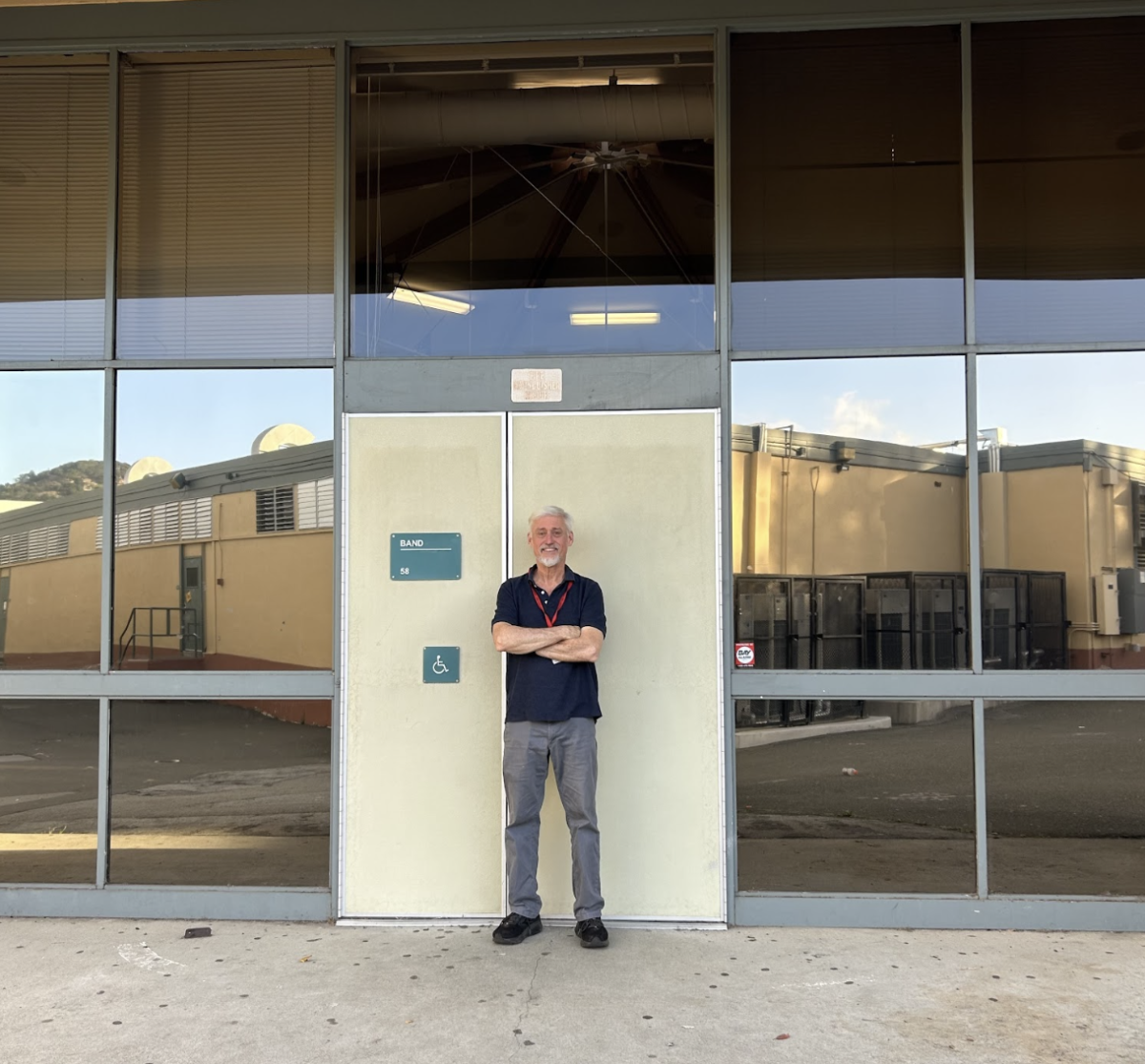
Mr. Simenstad, an SRHS teacher and union representative, explained that the union’s role is to represent employees through collective bargaining and negotiating contracts that determine teacher salaries, benefits, workload expectations, and staffing ratios. These agreements help guide how the district allocates its budget each year.
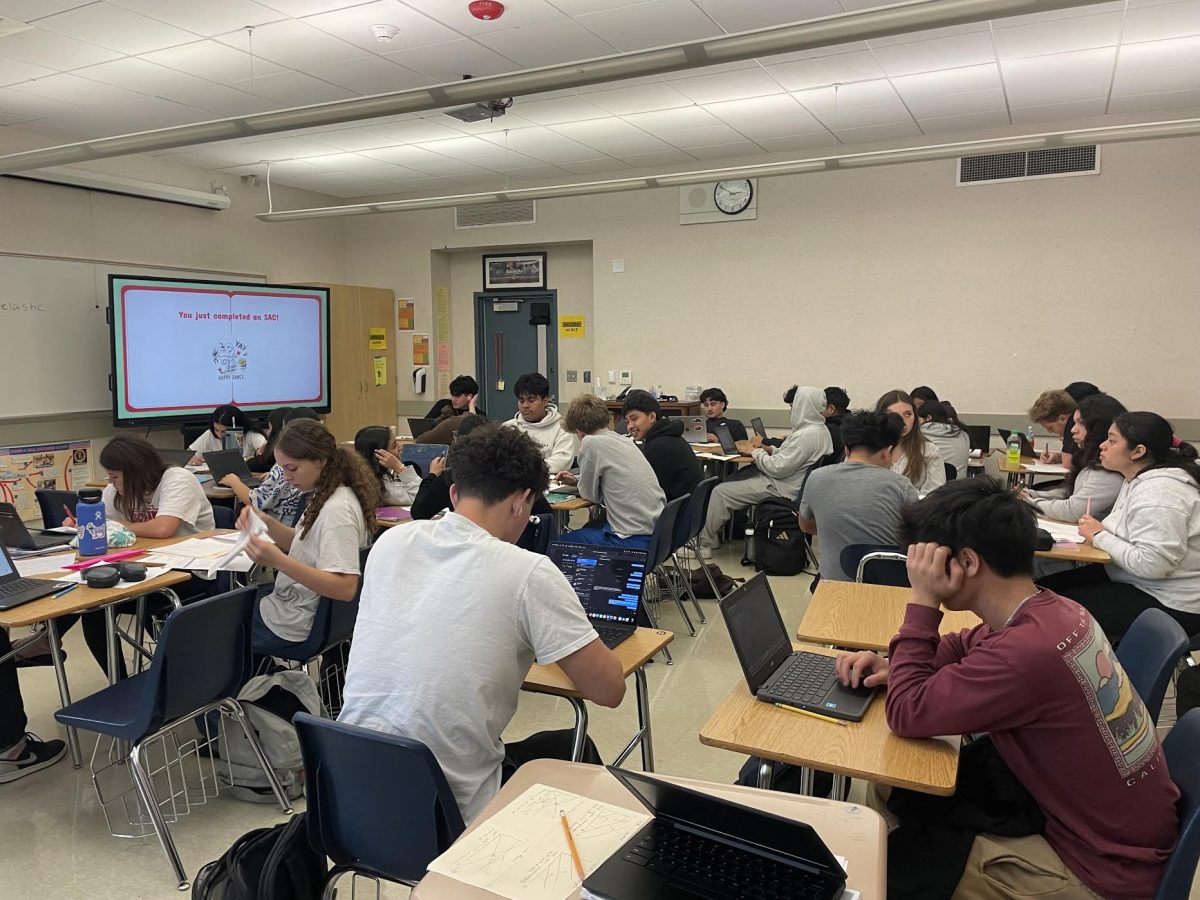
He explained that staffing decisions are closely tied to enrollment numbers and contractual limits. “We need to make sure that we are accurately staffed, not overstaffed or understaffed,” he said. While smaller classes may benefit students, they also affect how much funding is available for future salary increases and other necessary resources.
Simenstad also noted the tension between class size and compensation. While declining enrollment may lead to smaller class sizes and more manageable workloads, it can also limit salary growth.
Another union representative, Mr. Chretien, emphasized that budget decisions reflect district priorities and are shaped through multiple formal channels. Union leadership participates in the district’s Budget Advisory Committee, where administrators, staff, parents, and community members review financial proposals and provide input. However, final decisions ultimately remain at the district level.
Chretien also explained that union concerns are raised during school board meetings and contract negotiations. Although the union does not make the final decisions, he said these forums allow staff members to advocate for better working conditions and staffing levels.
When layoffs occur, state law requires districts to follow seniority rules, meaning newer teachers are typically the first to be affected. Chretien noted that while this protects long-term staff members, it can also result in the loss of younger educators who bring new ideas and perspectives to schools. “As staff shrinks, we lose experts in the field and people who connect deeply with students,” he said. “It’s a real loss for the community.”
Both representatives also pointed out that budget cuts extend beyond staffing. Reductions also affect classroom resources, student support services, and extracurricular programs. “Restricting money means restricting services,” Chretien said, adding that materials, technology, and counseling support can all be affected.
While acknowledging that cuts are sometimes unavoidable during financial crises, Simenstad said he would prefer future reductions to target district-level administration before school sites because schools are where students are most directly affected.
While this perspective may create debate, many people outside the district may agree that reducing administrative costs before cutting school programs would lessen the impact on students and classroom curriculum.
Sara Chamberlin was involved in one of the extracurricular activities being cut for the Fall 2026 school year at SRHS. Chamberlin will be leaving her position as a language teacher at San Rafael High School this year, leaving many students distraught and staff members saddened by the news. She created a strong community through the Italian Club, her classroom environment, and her outgoing personality. Chamberlin and the other teachers leaving SRHS will now move forward in search of new jobs and opportunities to remain financially stable. This situation represents one of many teachers’ worst fears, but it has become a reality for many educators throughout the Marin community this year, and it is an issue that deserves greater attention.